Planning Bagging Options for a Bulk Blending Fertilizer Plant

Bagging is not a single final step when your orders use 25 kg, 50 kg and bulk bags. Each format changes filling cycles, bag handling, closing, conveying and warehouse flow. Your bulk blending fertilizer plant bagging configuration therefore needs to start with dispatch requirements, not only mixer capacity.

Convert Tonnes per Hour into Bags per Hour

Begin with hourly finished product from the blender and calculate bags per hour for every sales format. At the same tonnage, a 25 kg order creates twice as many bags as a 50 kg order. This calculation turns BB fertilizer production line bag size planning into a capacity brief for filling, sealing, check weighing, palletizing and forklift collection.

Record the percentage of each shift assigned to each bag size. Also note whether production changes formula and bag format together, because cleaning and label changes may extend the changeover.

Separate Small Bag and Bulk Bag Duties

A bulk bag creates a different filling and handling task from 25 kg or 50 kg sacks. Do not assume one filler covers both duties. Ask suppliers to show separate equipment or a documented changeover arrangement for your bulk fertilizer blending system packing flexibility.

You can compare fertilizer bagging equipment for small bags and bulk packaging before deciding whether both formats share an upstream hopper, conveyor or control sequence.

BB Fertilizer Plant

BB Fertilizer Plant

Match Every End of Line Step

A filling rate alone does not define real dispatch capacity. Compare bag feeding, weighing, filling, sewing or heat sealing, conveying and palletizing at the same bag format. Your fertilizer blending plant bagging capacity review can identify any stage with fewer bags per hour than the blender sends forward.

Ask how a buffer hopper manages short interruptions and where rejected or incomplete bags leave the line. Include pallet changes and forklift collection in the timing review.

Plan Changeovers Around Actual Orders

For each SKU, list formula, bag mass, bag material, closure, label, pallet pattern and order size. Your bulk blending plant dispatch requirements can then define which changes run automatically and which require operator setup.

Request a trial with actual bags and representative granules. Check pickup, opening, product flow, closing, conveyor stability and bag shape. Record settings instead of relying on one demonstration bag.

Prepare One Supplier Brief

Provide hourly blended output, bag size mix, bags per hour, material flow characteristics, workshop dimensions, available air and power, pallet size and forklift route. State whether bulk bags need a separate station or a shared upstream hopper.

YUSHUNXIN lists automatic packaging and palletizing as optional parts of its BB fertilizer line. Click here for more details.

For a project review, visit https://www.shunxin.eu/bulk-blending-fertilizer-plant/

How to Configure an NPK Fertilizer Blending Plant for Your Market

An NPK fertilizer blending project may look straightforward, but equipment selection depends on more than the required output. You need to consider whether the plant will process powders, finished granules, or both. Formula frequency, packaging specifications, dust control, automation, and future expansion also influence the final configuration.

For investors serving several agricultural markets, an NPK fertilizer blending plant designed for powder and granule formulas provides greater production flexibility. However, powder and granular materials behave differently during batching, conveying, mixing, and packaging. A successful project therefore begins with the product form and sales plan rather than an equipment list.

Start With the Fertilizer Products You Plan to Sell

NPK products contain nitrogen, phosphorus, and potassium in formulas selected for particular crops and soil conditions. They belong to the broader category of multinutrient fertilizers, but their physical forms can differ considerably.

Powder fertilizer production normally requires accurate batching, intensive mixing, enclosed conveying, and effective dust collection. Fine materials can escape at transfer points, while differences in bulk density may affect the consistency of the finished mixture.

Granular BB fertilizer production has another priority. The system needs to combine finished granules without excessive crushing. Similar particle sizes also help limit segregation during mixing, storage, transport, and bagging.

If your business plans to sell both products, an automatic batching and mixing system for blended NPK fertilizer can use separate process settings and suitable material-contact components for each production campaign.
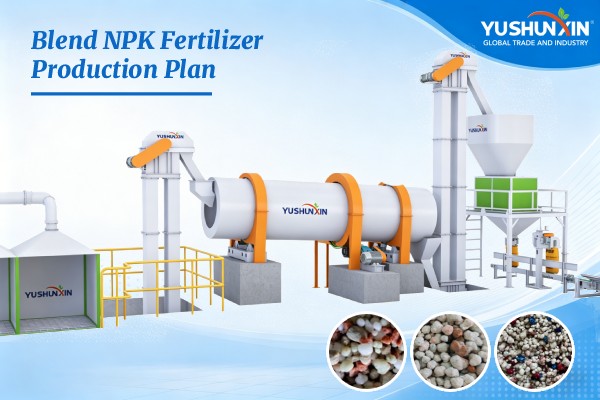
blend NPK fertilizer production solution

blend NPK fertilizer production solution

Match the Batching System to Formula Frequency

How often will your plant change fertilizer formulas?

A producer supplying only one or two standard products may use a relatively simple static batching arrangement. A factory serving distributors, plantations, or seasonal crop markets usually needs more raw-material bins and faster recipe adjustment.

Each bin can store a separate material such as urea, DAP, MAP, MOP, or ammonium sulfate. Weighing sensors measure the required quantity before the materials enter the mixer. The control system then manages the selected recipe and production batch.

This arrangement makes a flexible NPK blending line for changing fertilizer recipes particularly useful when a factory produces several nutrient grades. It also reduces the need to rearrange equipment whenever the sales department introduces another formula.

Select the Mixer According to Material Form

The mixer affects product uniformity, particle condition, cleaning time, and production continuity.

Horizontal, single-shaft, or double-shaft mixers suit many powder fertilizer projects because they create strong material movement. Enclosures and dust-collection connections can control powder released around the inlet and discharge points.

BB fertilizer mixers and rotary drum blenders suit granular materials. Their tumbling action combines the granules while limiting aggressive mechanical contact. A drum arrangement can also support continuous production at medium or large capacities.

For a practical capacity reference, the 10 TPH bulk blending fertilizer factory configuration combines multi-bin batching, belt conveying, drum mixing, buffer storage, and automatic bagging.

Coordinate Mixing and Packaging Capacity

A high-capacity mixer cannot maintain its rated output when the packaging section operates too slowly. The batching, mixing, conveying, buffer storage, and bagging units need compatible capacities.

A finished-product bin between the mixer and packing machine can stabilize material flow. It allows the mixer to begin another cycle while the packaging system handles the previous batch. This arrangement reduces waiting time between the main processing stages.

When planning an industrial fertilizer blending plant with integrated packaging, confirm the required bag sizes, weighing accuracy, sealing method, daily working hours, and desired automation level. The answers determine whether the project needs a single packing scale, double weighing units, automatic bag feeding, or robotic palletizing.

Consider Cleaning, Corrosion and Future Expansion

Frequent formula changes make cleaning access especially important. Residue inside bins, conveyors, mixers, and buffer hoppers may enter the following production batch. Accessible inspection doors and an organized cleaning procedure help the factory manage product changeovers.

Material selection also matters. Carbon steel can suit many standard applications, while stainless steel contact parts may offer advantages for corrosive materials or projects with stricter cleaning requirements.

Some investors begin with physical blending and later add coating or granulation equipment. Powder mixtures can enter dry roller compaction or a wet granulation process, while finished granules can receive functional coatings. Leaving suitable floor space and conveyor interfaces during the first installation can make later expansion easier.

Prepare the Right Information Before Requesting a Proposal

Equipment suppliers can develop a customized NPK fertilizer mixing factory solution more efficiently when the project information is complete. A useful inquiry includes:

  • Raw-material names and physical forms
  • Number of fertilizer formulas
  • Required output per hour
  • Planned working hours per day
  • Powder or granular finished product
  • Bag sizes and packaging requirements
  • Available workshop dimensions
  • Local power supply
  • Required automation level
  • Future coating or granulation plans

You can learn more about available capacity ranges and equipment combinations before preparing your project request.

For equipment selection and layout planning, submit your raw materials, target capacity, product form, bag size, and workshop dimensions through: https://www.mixedfertilizermachines.com/products/npk-fertilizer-blending-plant/

How Much Capital Is Needed to Establish a BB Fertilizer Manufacturing Plant?

A BB fertilizer manufacturing plant cost usually depends on several visible factors, and each factor influences the total budget in a measurable way. A bulk blend fertilizer factory mainly spends capital on the blending/mixing process, the batching and conveying procedure, the packaging section, and the workshop infrastructure that supports stable production. Moreover, raw material types and their physical properties also affect machine selection, wear parts, and long-term operating cost. Therefore, an investor usually evaluates fertilizer plant setup plans by matching target capacity, automation level, and bulk blending accuracy. A clear quotation often requires a defined product formula, a defined bulk blended fertilizer production procedure, and a defined equipment list for the BB fertilizer plant.

What raw materials suit BB/bulk blending production and influence the fertilizer plant setup budget?

Raw materials for BB fertilizer production usually include granular or prilled fertilizers that keep stable particle size and flowability, because a bulk blending process requires consistent feeding and consistent discharge. Common examples include urea (prill or granular), ammonium sulfate, ammonium chloride, CAN, and different grades of NPK compound granules. Potash sources such as MOP (potassium chloride) and SOP (potassium sulfate) also suit bulk blend fertilizer making when they keep similar granule size to the nitrogen sources. Phosphate sources often include DAP, MAP, and TSP granules, which support bulk blended fertilizer preparation with stable density.

Furthermore, secondary nutrient and micronutrient materials can enter BB blending when they keep a granular form, such as kieserite, gypsum granules, zinc sulfate granules, boron granules, or coated trace-element carriers. Material moisture content, anti-caking performance, and particle strength directly change the cost, because dusty or fragile materials require more dust control, more sieving, and more replacement parts. As a result, a BB fertilizer plant setup usually reserves budget for raw material storage bins, pre-screening, and calibrated dosing to protect blending accuracy.

BB Fertilizer Plant

BB Fertilizer Plant

Which blending/mixing equipment configuration controls the bulk blend fertilizer factory price most effectively?

A bulk blend fertilizer factory price often depends on the core mixing machinery and the accuracy of the batching procedure, because bulk blending requires uniform distribution without breaking granules. A static or automatic batching machine usually becomes the first cost driver, since the batching unit determines formula accuracy and production rhythm. In addition, a bucket elevator or belt conveyor normally connects bins, batching, and the BB fertilizer blender, and the conveying equipment determines layout length, workshop height, and installation cost.

A small-capacity BB fertilizer blender/mixer often uses a simple and compact blending structure, and this option fits projects that target flexible formulas with moderate output. A drum type BB fertilizer mixer usually supports larger capacity bulk blend fertilizer manufacturing, because the drum provides continuous mixing action with stable residence time. Moreover, a well-designed mixer emphasizes low granule breakage, short mixing time, and convenient inspection ports, which improves product consistency and reduces maintenance budget. Therefore, a business plan for building a BB fertilizer plant typically compares mixer volume, liner material, drive system, and anti-corrosion configuration to reach a balanced equipment quotation.

What supporting machines raise or reduce the fertilizer manufacturing plant cost in real projects?

A bb fertilizer plant cost does not only include a blender, because a complete bulk blending production line usually requires preparation and finishing sections. A crushing machine, such as a vertical crusher or chain crusher, often enters the plan when some incoming materials arrive in lumps or when recycled oversize returns from screening. This crusher selection affects capital cost and also affects the stability of the bulk blended fertilizer production process, because uniform granule size improves mixing uniformity and reduces segregation.

A packing machine also influences the fertilizer plant budget, because bulk blend fertilizer production frequently serves both bulk delivery and bagged sales. An automatic weighing and packing system typically raises equipment price, yet it improves labor efficiency and reduces weight deviation claims. In addition, a simple screening unit can help remove dust or oversize particles, which protects the BB fertilizer blending procedure and improves product appearance. Each supporting machine adds cost, but each machine also reduces operational risk, so a realistic fertilizer plant setup often includes two or three key auxiliaries rather than an oversized list.

Conclusion

An investor usually estimates how much capital is needed to establish a BB fertilizer manufacturing plant by dividing the budget into raw material handling, batching and conveying, BB fertilizer blending/mixing machinery, and packing and auxiliary equipment. Raw material selection such as urea, DAP, MOP, and NPK granules directly affects the blending accuracy and the maintenance cost of the bulk blending process. Equipment choices such as an automatic/static batching machine, bucket elevator, drum type BB fertilizer mixer, crusher, and packing machine usually determine the main fertilizer plant price range. A reliable quotation requires clear capacity, automation expectations, and workshop conditions, because each factor changes the fertilizer manufacturing plant cost in a practical way. A professional fertilizer equipment manufacturer- Yushunxin can provide matching production line configurations and cost-effective solutions for bulk blend fertilizer production planning. You can visit: https://www.fertilizerproductequipment.com/bb-fertilizer-plant-cost/

What Factors Influence the Cost of BB Fertilizer Plant Setup?

Setting up a bulk blending (BB) fertilizer plant involves careful planning and consideration of various factors that affect the overall fertilizer plant setup cost. Understanding these factors is essential for manufacturers aiming to produce high-quality fertilizer granules efficiently and cost-effectively. This article explores the key elements influencing the cost of establishing a BB fertilizer manufacturing plant, focusing on raw materials, machinery features, and the granulation process itself.

What Raw Materials Are Suitable for BB Fertilizer Production?

The selection of raw materials significantly impacts the bb fertilizer manufacturing plant cost. Suitable raw materials for BB fertilizer production include nitrogen sources like urea and ammonium nitrate, phosphorus sources such as monoammonium phosphate (MAP) and diammonium phosphate (DAP), and potassium sources like potassium chloride and potassium sulfate. Micro-nutrients and additives can also be included to enhance the fertilizer’s effectiveness. The availability, quality, and prices of these raw materials directly influence the fertilizer factory cost. Manufacturers need to source high-quality materials at reasonable prices to produce superior granules without inflating the production expenses.

How Do Machinery Features Impact the Fertilizer Plant Setup Cost?

The features and quality of fertilizer granulation machinery play a crucial role in determining the fertilizer plant cost. Advanced machinery such as BB fertilizer granulators, mixers, and automatic batching systems enhance production efficiency and product consistency. High-quality granulators and pelletizers ensure uniform granule size and shape, which is vital for effective nutrient distribution. While investing in sophisticated equipment may involve higher initial costs, it reduces long-term operational expenses through improved efficiency and durability. Selecting the right machinery that balances cost and functionality is essential for optimizing the fertilizer manufacturing plant cost.

What Is the Role of Granulation in BB Fertilizer Production Costs?

Granulation is a fundamental process in BB fertilizer production that affects both the quality of the final product and the overall manufacturing cost. The granulating process transforms raw materials into uniform granules or pellets, enhancing the fertilizer’s handling, application, and storage characteristics. Different granulation technologies, such as drum granulation, disc granulation, and extrusion granulation, come with varying costs and efficiencies. Efficient granulation reduces waste and energy consumption, thereby lowering the fertilizer manufacturing expenses. Understanding the intricacies of the granulation process and investing in suitable granulating equipment are vital steps in managing the fertilizer factory cost effectively.

How Can Professional Manufacturers Influence Your Fertilizer Factory Cost?

Collaborating with a professional fertilizer equipment manufacturer can significantly impact your fertilizer plant setup cost. Expert manufacturers offer tailored solutions that align with specific production needs and budget constraints. By providing high-quality granulators, pelletizers, and other essential machinery, they enhance production efficiency and product quality. Companies like Yushunxin specialize in designing and supplying advanced fertilizer production equipment, helping manufacturers reduce setup costs while maintaining high standards. Partnering with experienced suppliers ensures access to the latest technology, technical support, and after-sales services, which contribute to the overall success and cost-effectiveness of the fertilizer manufacturing plant.

Conclusion

In summary, the cost of setting up a BB fertilizer plant is influenced by multiple factors, including the selection of suitable raw materials, the choice of efficient machinery, and the optimization of the granulation process. Careful consideration of these elements can lead to significant savings in the fertilizer plant setup cost. By partnering with professional equipment manufacturers like Yushunxin, manufacturers can access expert guidance and high-quality machinery, ensuring a successful and profitable fertilizer production operation. You can visit: https://www.fertilizerproductequipment.com/bb-fertilizer-plant-cost/