
Industrial freeze drying can produce high-value vegetable ingredients with attractive color, texture, and long storage potential. However, good results often start before vegetables enter the freeze dryer.
For many vegetables, blanching forms an important part of pretreatment. A suitable Vegetable Blanching Machine helps you control heating time and temperature before freezing.
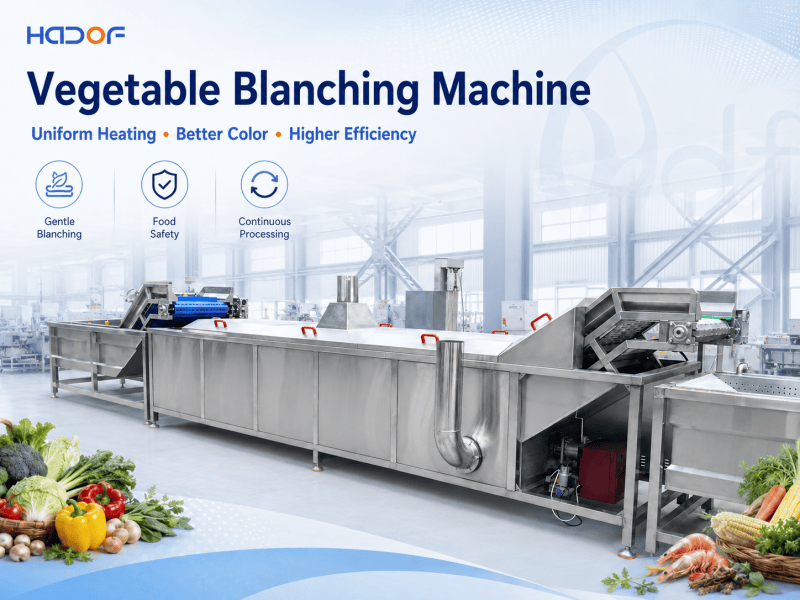
Vegetable Blanching Machine
Moreover, proper blanching can support more consistent processing across different batches. It also helps factories connect washing, cutting, freezing, freeze drying, and packaging into one practical workflow.
Why Blanch Vegetables Before Freeze Drying?
Fresh vegetables continue natural enzyme activity after harvesting. These enzymes can influence color, flavor, and texture during processing and storage.
Blanching uses controlled hot water or steam to treat vegetables for a short period. This heat treatment helps deactivate enzymes before freezing.
Moreover, blanching can reduce surface microorganisms and remove some remaining impurities. Therefore, it adds another controlled pretreatment step before freeze drying.
Vegetables such as carrots, potatoes, spinach, beans, and other products may require different blanching conditions. You can adjust temperature and treatment time according to the material.
However, manufacturers should avoid excessive heating. Too much heat can soften vegetables unnecessarily and affect their final structure.
How Does an Industrial Vegetable Blanching Machine Work?
An industrial blancher moves vegetables through controlled hot water or steam.
Operators feed prepared vegetables into the machine. Then, the conveyor carries them through the heating section at a controlled speed.
The heating system maintains the required processing temperature. Meanwhile, the circulation system distributes heat across the treatment area.
Operators can adjust processing time according to vegetable type and cut size. Therefore, factories can create suitable processing settings for different recipes.
HADOF offers industrial vegetable blanching equipment for continuous vegetable processing lines.
The equipment can use electric heating, steam heating, or hot-water circulation according to the project configuration.
What Happens Before the Blanching Stage?
Blanching works better when the factory prepares raw materials consistently.
First, a Bubble Cleaning Machine can remove dirt and surface impurities from vegetables.
Next, a Vegetable Slicer can create uniform slices, cubes, strips, or other product shapes.
Consistent size matters because smaller and larger pieces absorb heat differently. Therefore, uniform cutting helps the blanching machine deliver more consistent treatment.
A typical pretreatment flow can follow:
Sorting → Washing → Cutting → Blanching → Dewatering → Freezing → Freeze Drying → Packaging
This arrangement gives factories a clear processing sequence and reduces unnecessary manual movement.
Why Remove Surface Water After Blanching?
Vegetables leave the blancher with surface moisture. Therefore, factories usually need a water-removal step before freezing.
A Vibrating Dewatering Machine can help remove excess surface water after washing or blanching.
This step prepares vegetables for the next stage and supports a cleaner workflow.
Moreover, controlled dewatering helps factories avoid carrying unnecessary water into the freezing system.
Factories can combine blanching and dewatering equipment according to raw material characteristics and required throughput.
Why Does Fast Freezing Matter After Blanching?
Freeze drying starts with frozen raw material. Therefore, the freezing stage directly connects pretreatment with the freeze dryer.
After blanching and dewatering, an Industrial Tunnel Freezer can quickly reduce product temperature during continuous production.
The tunnel freezer uses controlled cold airflow and conveyor movement. Operators can adjust conveyor speed and freezing conditions for different vegetables.
Fast and uniform freezing helps factories prepare consistent frozen materials for the following freeze-drying stage.
Moreover, a continuous tunnel freezer can connect directly with upstream washing, slicing, and blanching equipment.
Can Blanching Improve Production Consistency?
Industrial vegetable production often handles large batches. Manual blanching can create differences in temperature, treatment time, and operator handling.
A continuous blancher helps control these variables more consistently.
For example, factories can adjust conveyor speed when product thickness changes. They can also adjust heating conditions for different vegetables.
Moreover, automatic conveying reduces repeated manual transfer.
This approach suits vegetable processors, central kitchens, frozen vegetable manufacturers, and freeze-dried ingredient producers.
How Should You Configure a Vegetable Freeze-Drying Line?
Every vegetable behaves differently during washing, cutting, blanching, freezing, and drying.
Therefore, one fixed production line cannot suit every raw material.
HADOF can configure the line according to your vegetables, required production capacity, and available factory space.
For example, a root vegetable line may need stronger washing and different cutting equipment. In contrast, leafy vegetables may require gentler handling.
The final configuration can connect washing, cutting, blanching, dewatering, quick freezing, freeze drying, and packaging.
After freeze drying, a Food Packing Machine can support the final packaging stage.
This integrated approach helps you build a smoother workflow from fresh vegetables to finished freeze-dried products.
Why Make Blanching Part of Your Freeze-Drying Project?
A freeze dryer performs the main moisture-removal process, but upstream preparation strongly influences the overall production workflow.
Blanching gives you better control over vegetable pretreatment before freezing.
Moreover, continuous equipment can reduce manual handling and support larger production volumes.
When washing, cutting, blanching, dewatering, freezing, and packaging equipment work together, factories can manage vegetable processing more efficiently.
HADOF can customize the production line according to your raw material, target capacity, and factory layout.
If you need a customized vegetable blanching or freeze-drying production solution, please visit the HADOF Freeze Dryer Homepage: https://www.freezehadof.com/