Should a Fresh-Cut Salad Factory Choose a Vortex Vegetable Washing Machine or a Bubble Food Washing Machine?

Fresh-cut salad factories need a washing method that matches product size, leaf structure, soil load, and the next food processing procedure. A vortex vegetable washing machine for cut salad greens creates circulating water movement for chopped lettuce, cabbage shreds, spinach, celery sections, herbs, and mixed salad materials. A bubble washer creates gentler air-and-water agitation for larger whole leaves, long stems, and products that need a broad washing path. Therefore, a factory should compare raw materials and production goals before it buys equipment, requests a quotation, or fixes an investment budget.
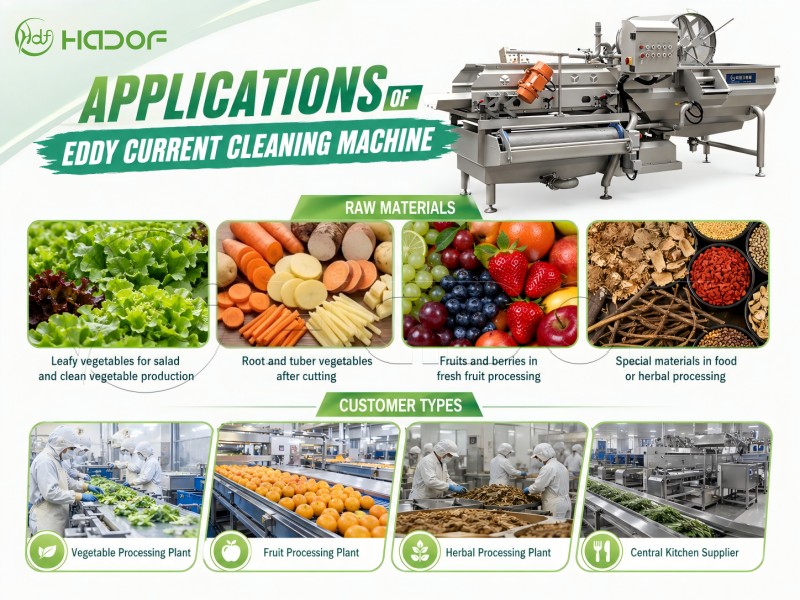
Applications of Eddy Current Cleaning Machine

Applications of Eddy Current Cleaning Machine

Which Raw Materials Suit Vortex Washing or Bubble Washing in Fresh-Cut Vegetable Production?

Raw material form gives the clearest starting point. A vortex washing system suits cut lettuce, shredded cabbage, spinach leaves, bok choy sections, diced carrots, potato cubes, onion pieces, apple chunks, grapes, and similar small or separated materials. Circulating water can open folds, move light pieces through the tank, and release sand or cutting residues. In contrast, a bubble washing machine often suits whole lettuce leaves, large cabbage leaves, celery stalks, intact fruits, and longer vegetable pieces. The factory should also classify leaf vegetables used in commercial salad preparation by tenderness, length, buoyancy, cut size, and dirt condition because one food washing technique cannot handle every raw material with the same settings.

How Does a Vortex Vegetable Washing Machine Handle Cut Salad Materials?

A vortex washer uses a pump to drive circulating water through a curved tank, while bubble agitation adds movement around the product. The water flow turns and separates cut materials without brush contact. Overflow outlets remove floating fragments, screens capture fine residues, and drain points support sand disposal management. The target equipment page also combines washing with vibrating dewatering, so the machine can move cleaned vegetables toward inspection, air drying, centrifugal dehydration, blanching, or packing. Moreover, operators can adjust water flow, vibration, filtration, and transfer conditions for lettuce, cabbage, spinach, diced vegetables, or fruit pieces. This integrated food production system can reduce unnecessary handling between washing and moisture treatment.

When Does a Bubble Food Washing Machine Fit Whole Leaves Better?

A bubble washer fits products that need soft tumbling across a longer water tank. Whole cabbage leaves, large lettuce leaves, celery, long-stem bok choy, intact tomatoes, apples, and similar produce can move through air bubbles and moderate water circulation without the concentrated turning action of a vortex. The factory can also use bubble washing as a pre-wash when raw vegetables carry loose soil or when a later machine completes detailed cleaning. The Hadof guide to leafy green washing technology for whole and cut vegetables explains that larger whole leaves and long pieces often suit bubble treatment, while chopped and folded salad materials often suit vortex cleaning. Consequently, product dimensions should guide food cleaning equipment selection.

How Should a Factory Compare Leaf Protection, Impurity Removal, and Water Management?

The production team should compare several process controls instead of relying on the washer name. First, the team should test whether the water movement separates folded leaves and releases sand without tearing edges. Second, the team should examine overflow channels, sediment outlets, filters, spray rinses, and water circulation management. Third, the team should review how the machinery handles floating insects, leaf fragments, soil, starch, and cutting residue. Finally, the team should evaluate discharge height and product transfer because abrupt drops can damage delicate materials after washing. A cost-effective food preparation process balances cleaning intensity, product protection, wastewater treatment, filter cleaning, and moisture disposal rather than maximizing water force.

What Equipment Configuration Supports Washing, Dewatering, and Packing?

A fresh-cut salad factory usually needs more than one cleaner. The complete food manufacturing process can include receiving, sorting, trimming, leaf separation, cutting, soaking, washing, final rinsing, vibrating draining, centrifugal dehydration, air drying, weighing, and packaging. Buyers who compare an industrial vortex washer with integrated vibrating dewatering should confirm whether one washing stage can handle the incoming soil load or whether the project needs a second wash and a fresh-water rinse. In addition, the downstream dehydrator and packer should match the washer output. Balanced equipment capacity protects continuous production and prevents product accumulation between the food treatment stages.

Which Details Help Buyers Compare Machine Cost, Price, and Quotation Scope?

The buyer should provide raw material names, photographs, whole or cut dimensions, hourly input, required finished output, soil condition, washing stages, final moisture target, workshop dimensions, voltage, water supply, drainage positions, and packaging format. These details help the supplier calculate tank length, pump configuration, filtration, conveyor height, dewatering capacity, and automation level. The target page lists a reference configuration around 1,500 kg/h, 4.2 kW, and 4000 × 1800 × 1930 mm, while the final cost depends on tank height and selected functions. Hadof fresh-produce processing equipment and line design can connect the washer with cutters, drainers, dryers, and packing machinery. Therefore, procurement teams should compare equal equipment scopes before purchase.

A vortex machine usually gives a stronger process match for chopped, shredded, diced, and folded salad materials, while a bubble washer often gives a better match for large whole leaves, long stems, and broad pre-washing duties. The factory should base the final selection on material trials, impurity type, capacity, water management, moisture treatment, and line layout. This structured food processing comparison helps a central kitchen, supermarket salad supplier, or industrial vegetable factory control machine investment without choosing unnecessary equipment. Customers can review the target product at https://www.hadofps.com/products/vortex-cleaning-machine/
How to Configure an NPK Fertilizer Blending Plant for Your Market

An NPK fertilizer blending project may look straightforward, but equipment selection depends on more than the required output. You need to consider whether the plant will process powders, finished granules, or both. Formula frequency, packaging specifications, dust control, automation, and future expansion also influence the final configuration.

For investors serving several agricultural markets, an NPK fertilizer blending plant designed for powder and granule formulas provides greater production flexibility. However, powder and granular materials behave differently during batching, conveying, mixing, and packaging. A successful project therefore begins with the product form and sales plan rather than an equipment list.

Start With the Fertilizer Products You Plan to Sell

NPK products contain nitrogen, phosphorus, and potassium in formulas selected for particular crops and soil conditions. They belong to the broader category of multinutrient fertilizers, but their physical forms can differ considerably.

Powder fertilizer production normally requires accurate batching, intensive mixing, enclosed conveying, and effective dust collection. Fine materials can escape at transfer points, while differences in bulk density may affect the consistency of the finished mixture.

Granular BB fertilizer production has another priority. The system needs to combine finished granules without excessive crushing. Similar particle sizes also help limit segregation during mixing, storage, transport, and bagging.

If your business plans to sell both products, an automatic batching and mixing system for blended NPK fertilizer can use separate process settings and suitable material-contact components for each production campaign.

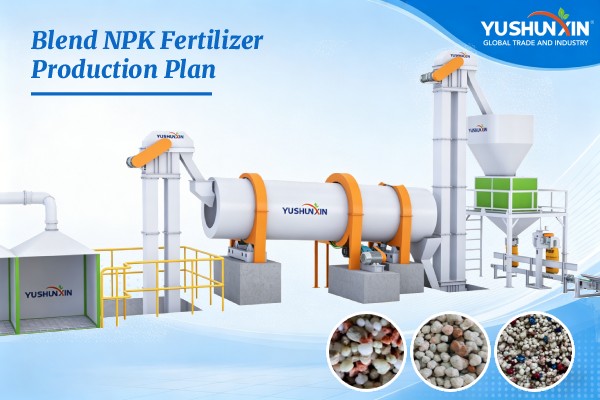
blend NPK fertilizer production solution

blend NPK fertilizer production solution

Match the Batching System to Formula Frequency

How often will your plant change fertilizer formulas?

A producer supplying only one or two standard products may use a relatively simple static batching arrangement. A factory serving distributors, plantations, or seasonal crop markets usually needs more raw-material bins and faster recipe adjustment.

Each bin can store a separate material such as urea, DAP, MAP, MOP, or ammonium sulfate. Weighing sensors measure the required quantity before the materials enter the mixer. The control system then manages the selected recipe and production batch.

This arrangement makes a flexible NPK blending line for changing fertilizer recipes particularly useful when a factory produces several nutrient grades. It also reduces the need to rearrange equipment whenever the sales department introduces another formula.

Select the Mixer According to Material Form

The mixer affects product uniformity, particle condition, cleaning time, and production continuity.

Horizontal, single-shaft, or double-shaft mixers suit many powder fertilizer projects because they create strong material movement. Enclosures and dust-collection connections can control powder released around the inlet and discharge points.

BB fertilizer mixers and rotary drum blenders suit granular materials. Their tumbling action combines the granules while limiting aggressive mechanical contact. A drum arrangement can also support continuous production at medium or large capacities.

For a practical capacity reference, the 10 TPH bulk blending fertilizer factory configuration combines multi-bin batching, belt conveying, drum mixing, buffer storage, and automatic bagging.

Coordinate Mixing and Packaging Capacity

A high-capacity mixer cannot maintain its rated output when the packaging section operates too slowly. The batching, mixing, conveying, buffer storage, and bagging units need compatible capacities.

A finished-product bin between the mixer and packing machine can stabilize material flow. It allows the mixer to begin another cycle while the packaging system handles the previous batch. This arrangement reduces waiting time between the main processing stages.

When planning an industrial fertilizer blending plant with integrated packaging, confirm the required bag sizes, weighing accuracy, sealing method, daily working hours, and desired automation level. The answers determine whether the project needs a single packing scale, double weighing units, automatic bag feeding, or robotic palletizing.

Consider Cleaning, Corrosion and Future Expansion

Frequent formula changes make cleaning access especially important. Residue inside bins, conveyors, mixers, and buffer hoppers may enter the following production batch. Accessible inspection doors and an organized cleaning procedure help the factory manage product changeovers.

Material selection also matters. Carbon steel can suit many standard applications, while stainless steel contact parts may offer advantages for corrosive materials or projects with stricter cleaning requirements.

Some investors begin with physical blending and later add coating or granulation equipment. Powder mixtures can enter dry roller compaction or a wet granulation process, while finished granules can receive functional coatings. Leaving suitable floor space and conveyor interfaces during the first installation can make later expansion easier.

Prepare the Right Information Before Requesting a Proposal

Equipment suppliers can develop a customized NPK fertilizer mixing factory solution more efficiently when the project information is complete. A useful inquiry includes:

  • Raw-material names and physical forms
  • Number of fertilizer formulas
  • Required output per hour
  • Planned working hours per day
  • Powder or granular finished product
  • Bag sizes and packaging requirements
  • Available workshop dimensions
  • Local power supply
  • Required automation level
  • Future coating or granulation plans

You can learn more about available capacity ranges and equipment combinations before preparing your project request.

For equipment selection and layout planning, submit your raw materials, target capacity, product form, bag size, and workshop dimensions through: https://www.mixedfertilizermachines.com/products/npk-fertilizer-blending-plant/

Сколько стоит линия грануляции бентонита производительностью от 1 до 30 т/ч

Стоимость проекта нельзя точно определить только по требуемой часовой мощности. Линия грануляции бентонита производительностью 1–30 т/ч подбирается с учётом влажности, дисперсности и назначения сырья, требуемого размера гранул, способа грануляции, степени автоматизации и состава вспомогательных участков. Поэтому два проекта с одинаковой производительностью могут заметно отличаться по комплектации.

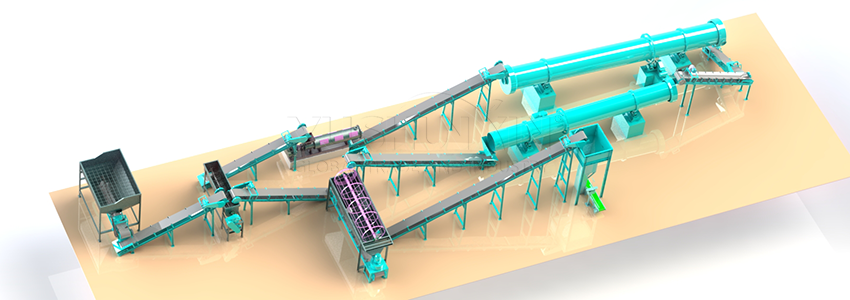
Линия-по-производству-гранул-бентонита

Линия-по-производству-гранул-бентонита

Что входит в базовую стоимость

Для стабильной подачи бентонитового порошка нужны приёмный бункер, дозатор и транспортирующее оборудование. Если сырьё содержит комки или крупные включения, перед грануляцией добавляют дробление и классификацию. Смеситель выравнивает состав и распределяет воду или связующее, когда этого требует выбранная технология.

Центральным узлом становится гранулятор. Дисковая машина подходит для визуально контролируемого формирования округлых частиц и гибкой регулировки. Барабанный агрегат выбирают для непрерывного выпуска и широкого диапазона крупности. Двухвалковая машина прессует подготовленный сухой порошок и может сократить тепловую часть процесса, если материал устойчиво уплотняется без избыточной влаги.

После формирования продукта обычно требуются просеивание и возврат некондиционной фракции. Для влажной технологии в проект могут войти сушилка, охладитель, аспирация и система нанесения покрытия. Завершают процесс накопительный бункер и упаковочная машина. Именно поэтому комплект оборудования для выпуска бентонитовых гранул нужно оценивать целиком, а не по цене одного гранулятора.

Почему мощность влияет на бюджет нелинейно

Переход от малого участка к промышленному производству требует не только более крупной машины. Увеличиваются число питателей и грануляторов, размеры грохота, длина конвейеров, производительность аспирации и упаковки. Для высокой мощности может потребоваться параллельная установка нескольких грануляторов, резервирование критических узлов и более развитая автоматизация.

При составлении перечня полезно сверить состав линии гранулирования бентонита с фактической планировкой цеха. Расстояния между узлами, высота здания, площадки обслуживания и место для возвратного потока влияют на металлоконструкции и транспортную систему.

Качество исходного минерала также определяет технологию. Минералогические свойства бентонита связаны с его набуханием, водопоглощением и поведением при смешивании. Эти характеристики необходимо проверять по образцу конкретного месторождения, а не переносить из чужого проекта.

Какие расходы нужно считать кроме оборудования

Инвестиционный бюджет включает доставку, монтаж, электромонтаж, фундамент, аспирацию, складирование сырья и готового продукта, пусконаладку и запас быстроизнашиваемых деталей. Эксплуатационный расчёт должен учитывать электроэнергию, топливо для сушки, связующее, рабочую силу, упаковку, обслуживание и долю возвратного материала.

Для предметного предложения поставщику нужны анализ сырья, исходная влажность, требуемая фракция, назначение гранул, часовая и годовая мощность, режим работы, доступное топливо, напряжение сети и чертёж площадки. После этого можно получить вариант под ваши параметры сырья с перечнем оборудования и предварительным ценовым диапазоном. Итоговая цена и срок поставки требуют отдельного подтверждения по согласованной комплектации.

Для получения более подробной информации, пожалуйста, посетите: https://www.granulyator.com/product/granulyator-bentonita/

Digestate Fertilizer Granule Manufacturing: Wet, Semi-Dry, or Dry Route

Turning composted biogas solids into uniform fertilizer granules is not simply a granulation machine decision. The correct route depends on moisture, particle size, output, utilities, and the finish expected by buyers. A practical design should protect nutrient value, limit rework, and fit your operating team.

Start with Feedstock Condition

Mature compost should be stable, free of oversized impurities, and consistent enough for controlled feeding. Check moisture, fiber length, bulk density, and the presence of sticky fines. Use crushing, screening, and mixing where necessary to prepare material and distribute binders or nutrient additives.

If feedstock varies seasonally, do not select a granulator from capacity alone. Ask how much wet material enters each hour, what drying energy is available, and how many hours the line must run. These figures define the most workable route.

When a Wet Route Is Appropriate

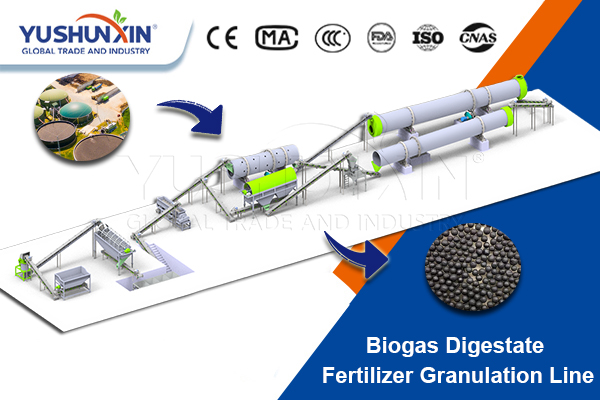
Wet processing suits material that retains moderate moisture and needs round, market-ready particles. A rotary drum digestate fertilizer granulation plant is suitable for larger, steady output where spraying, rolling, drying, cooling, screening, and recycling operate as one system. The drum builds granules around fine seed material.

A disc granulator for composted digestate is a flexible option for smaller projects or frequent recipe changes. Both routes normally require a dryer and cooler, so plan heat and ventilation from the start.

Why Choose a Semi-Dry Route?

A semi-dry route sits between wet rolling and dry compaction. It is useful when composted solids are dewatered but still need limited moisture or a binder for stable formation. Composted biogas digestate granulation equipment should therefore be selected as a system, not as an isolated granulator.

For this route, good mixing matters more than buyers often expect. An uneven binder dose creates weak granules, excess dust, or a costly return stream. Specify stainless steel contact parts where moisture, salts, and cleaning requirements justify corrosion resistance. Confirm the drying duty after trials rather than assuming partially dried feed needs no thermal treatment.

When Dry Compaction Makes Sense

If screened compost is already low in moisture, a dry biogas residue roller press granulator can reduce water addition and post-granulation drying. The rollers compact powder into flakes or shaped granules, followed by crushing and screening. This route has a simpler thermal section, but it demands dry feed and accurate particle-size control.

Dry compaction is not automatically the lowest-cost answer. Fine-powder preparation, roller wear, dust collection, and product-shape requirements must be included. A process trial shows whether the material compacts well without excessive binder use.

Biogas digestate granule manufacturing line

Biogas digestate granule manufacturing line

Plan the Whole Line Before You Buy

The final decision should compare utilities, labour, finished-granule quality, and future expansion—not simply machine price. Your digestate fertilizer pellet production line cost should include feeding, crushing, mixing, granulation, drying or cooling, screening, dust control, and packing. For a reference project, review the biogas digestate fertilizer granulation plant in germany.

Need help comparing material condition with a suitable route? Get more details before selecting equipment.

https://www.granulatedcompostsolutions.com/product/digestate-fertilizer-granule-manufacturing/