
Turning composted biogas solids into uniform fertilizer granules is not simply a granulation machine decision. The correct route depends on moisture, particle size, output, utilities, and the finish expected by buyers. A practical design should protect nutrient value, limit rework, and fit your operating team.
Start with Feedstock Condition
Mature compost should be stable, free of oversized impurities, and consistent enough for controlled feeding. Check moisture, fiber length, bulk density, and the presence of sticky fines. Use crushing, screening, and mixing where necessary to prepare material and distribute binders or nutrient additives.
If feedstock varies seasonally, do not select a granulator from capacity alone. Ask how much wet material enters each hour, what drying energy is available, and how many hours the line must run. These figures define the most workable route.
When a Wet Route Is Appropriate
Wet processing suits material that retains moderate moisture and needs round, market-ready particles. A rotary drum digestate fertilizer granulation plant is suitable for larger, steady output where spraying, rolling, drying, cooling, screening, and recycling operate as one system. The drum builds granules around fine seed material.
A disc granulator for composted digestate is a flexible option for smaller projects or frequent recipe changes. Both routes normally require a dryer and cooler, so plan heat and ventilation from the start.
Why Choose a Semi-Dry Route?
A semi-dry route sits between wet rolling and dry compaction. It is useful when composted solids are dewatered but still need limited moisture or a binder for stable formation. Composted biogas digestate granulation equipment should therefore be selected as a system, not as an isolated granulator.
For this route, good mixing matters more than buyers often expect. An uneven binder dose creates weak granules, excess dust, or a costly return stream. Specify stainless steel contact parts where moisture, salts, and cleaning requirements justify corrosion resistance. Confirm the drying duty after trials rather than assuming partially dried feed needs no thermal treatment.
When Dry Compaction Makes Sense
If screened compost is already low in moisture, a dry biogas residue roller press granulator can reduce water addition and post-granulation drying. The rollers compact powder into flakes or shaped granules, followed by crushing and screening. This route has a simpler thermal section, but it demands dry feed and accurate particle-size control.
Dry compaction is not automatically the lowest-cost answer. Fine-powder preparation, roller wear, dust collection, and product-shape requirements must be included. A process trial shows whether the material compacts well without excessive binder use.
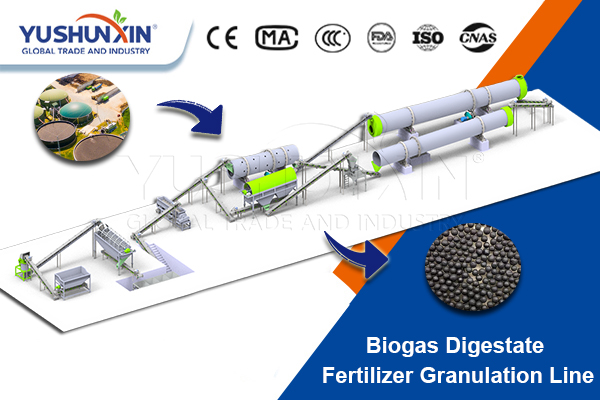
Biogas digestate granule manufacturing line
Plan the Whole Line Before You Buy
The final decision should compare utilities, labour, finished-granule quality, and future expansion—not simply machine price. Your digestate fertilizer pellet production line cost should include feeding, crushing, mixing, granulation, drying or cooling, screening, dust control, and packing. For a reference project, review the biogas digestate fertilizer granulation plant in germany.
Need help comparing material condition with a suitable route? Get more details before selecting equipment.
https://www.granulatedcompostsolutions.com/product/digestate-fertilizer-granule-manufacturing/