
Fresh-cut salad factories need a washing method that matches product size, leaf structure, soil load, and the next food processing procedure. A vortex vegetable washing machine for cut salad greens creates circulating water movement for chopped lettuce, cabbage shreds, spinach, celery sections, herbs, and mixed salad materials. A bubble washer creates gentler air-and-water agitation for larger whole leaves, long stems, and products that need a broad washing path. Therefore, a factory should compare raw materials and production goals before it buys equipment, requests a quotation, or fixes an investment budget.
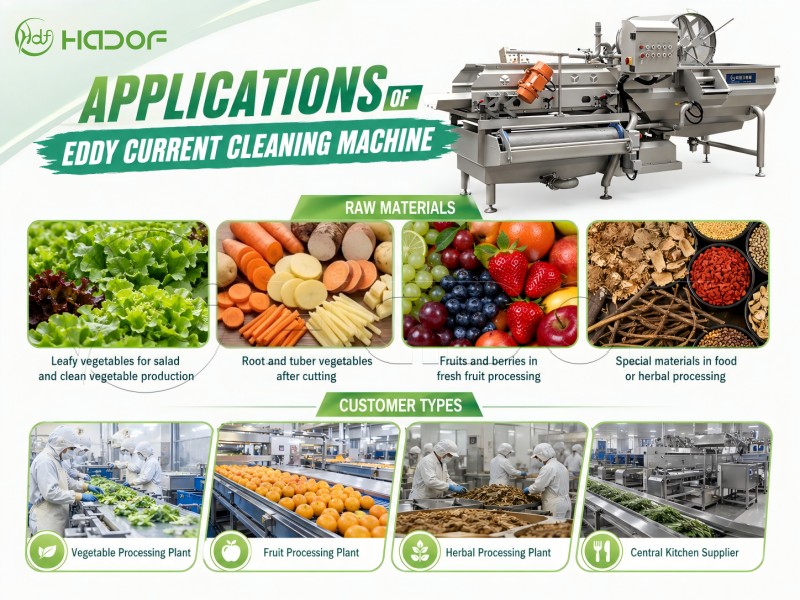
Applications of Eddy Current Cleaning Machine
Which Raw Materials Suit Vortex Washing or Bubble Washing in Fresh-Cut Vegetable Production?
Raw material form gives the clearest starting point. A vortex washing system suits cut lettuce, shredded cabbage, spinach leaves, bok choy sections, diced carrots, potato cubes, onion pieces, apple chunks, grapes, and similar small or separated materials. Circulating water can open folds, move light pieces through the tank, and release sand or cutting residues. In contrast, a bubble washing machine often suits whole lettuce leaves, large cabbage leaves, celery stalks, intact fruits, and longer vegetable pieces. The factory should also classify leaf vegetables used in commercial salad preparation by tenderness, length, buoyancy, cut size, and dirt condition because one food washing technique cannot handle every raw material with the same settings.
How Does a Vortex Vegetable Washing Machine Handle Cut Salad Materials?
A vortex washer uses a pump to drive circulating water through a curved tank, while bubble agitation adds movement around the product. The water flow turns and separates cut materials without brush contact. Overflow outlets remove floating fragments, screens capture fine residues, and drain points support sand disposal management. The target equipment page also combines washing with vibrating dewatering, so the machine can move cleaned vegetables toward inspection, air drying, centrifugal dehydration, blanching, or packing. Moreover, operators can adjust water flow, vibration, filtration, and transfer conditions for lettuce, cabbage, spinach, diced vegetables, or fruit pieces. This integrated food production system can reduce unnecessary handling between washing and moisture treatment.
When Does a Bubble Food Washing Machine Fit Whole Leaves Better?
A bubble washer fits products that need soft tumbling across a longer water tank. Whole cabbage leaves, large lettuce leaves, celery, long-stem bok choy, intact tomatoes, apples, and similar produce can move through air bubbles and moderate water circulation without the concentrated turning action of a vortex. The factory can also use bubble washing as a pre-wash when raw vegetables carry loose soil or when a later machine completes detailed cleaning. The Hadof guide to leafy green washing technology for whole and cut vegetables explains that larger whole leaves and long pieces often suit bubble treatment, while chopped and folded salad materials often suit vortex cleaning. Consequently, product dimensions should guide food cleaning equipment selection.
How Should a Factory Compare Leaf Protection, Impurity Removal, and Water Management?
The production team should compare several process controls instead of relying on the washer name. First, the team should test whether the water movement separates folded leaves and releases sand without tearing edges. Second, the team should examine overflow channels, sediment outlets, filters, spray rinses, and water circulation management. Third, the team should review how the machinery handles floating insects, leaf fragments, soil, starch, and cutting residue. Finally, the team should evaluate discharge height and product transfer because abrupt drops can damage delicate materials after washing. A cost-effective food preparation process balances cleaning intensity, product protection, wastewater treatment, filter cleaning, and moisture disposal rather than maximizing water force.
What Equipment Configuration Supports Washing, Dewatering, and Packing?
A fresh-cut salad factory usually needs more than one cleaner. The complete food manufacturing process can include receiving, sorting, trimming, leaf separation, cutting, soaking, washing, final rinsing, vibrating draining, centrifugal dehydration, air drying, weighing, and packaging. Buyers who compare an industrial vortex washer with integrated vibrating dewatering should confirm whether one washing stage can handle the incoming soil load or whether the project needs a second wash and a fresh-water rinse. In addition, the downstream dehydrator and packer should match the washer output. Balanced equipment capacity protects continuous production and prevents product accumulation between the food treatment stages.
Which Details Help Buyers Compare Machine Cost, Price, and Quotation Scope?
The buyer should provide raw material names, photographs, whole or cut dimensions, hourly input, required finished output, soil condition, washing stages, final moisture target, workshop dimensions, voltage, water supply, drainage positions, and packaging format. These details help the supplier calculate tank length, pump configuration, filtration, conveyor height, dewatering capacity, and automation level. The target page lists a reference configuration around 1,500 kg/h, 4.2 kW, and 4000 × 1800 × 1930 mm, while the final cost depends on tank height and selected functions. Hadof fresh-produce processing equipment and line design can connect the washer with cutters, drainers, dryers, and packing machinery. Therefore, procurement teams should compare equal equipment scopes before purchase.
A vortex machine usually gives a stronger process match for chopped, shredded, diced, and folded salad materials, while a bubble washer often gives a better match for large whole leaves, long stems, and broad pre-washing duties. The factory should base the final selection on material trials, impurity type, capacity, water management, moisture treatment, and line layout. This structured food processing comparison helps a central kitchen, supermarket salad supplier, or industrial vegetable factory control machine investment without choosing unnecessary equipment. Customers can review the target product at https://www.hadofps.com/products/vortex-cleaning-machine/