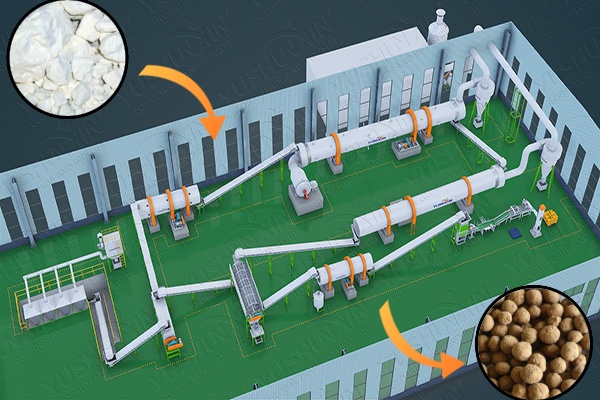
In fertilizer production, the quality and efficiency of lime rock granulation depend greatly on the right machinery and suitable raw materials. Various industries benefit from tailored granulation processes that transform lime-based minerals into value-added fertilizer products. Improving each stage of the process with specialized equipment not only enhances productivity but also creates uniform, high-quality fertilizer granules for multiple applications.
What Raw Materials for Fertilizer Production Suit Different Industries?
Lime rock and related materials, such as limestone, hydrated lime, and dolomitic lime, often serve as the core components in fertilizer granule production. Steel manufacturing industries utilize lime powder fertilizer to neutralize acidic soil in landscaping around plants. Municipal water treatment facilities depend on limestone-based pellet fertilizer products to reduce heavy metal contamination and adjust pH levels in effluent treatment. Mining operations employ lime-derived granules to stabilize tailings and reduce environmental hazards. Each industry requires customized materials: hydrated lime offers faster reaction in water treatment, while calcitic limestone provides slow-release nutrients in soil remediation. Suppliers choose the material based on solubility, calcium content, particle size, and reactivity to maximize the intended effect.

How Does Advanced Machinery Optimize the Lime Rock Fertilizer Granulation Process?
Enhancing efficiency begins with the integration of advanced machinery. A loader type feeder transports bulk lime powder or limestone particles steadily into the production line, ensuring continuous operation. The crain crusher breaks down large lime rock chunks, converting them into suitable fine powder for further processing. The horizontal mixer blends lime powder with other ingredients, achieving a homogenous mixture critical for consistent pellet quality. The double roller extrusion granulator compacts the blended material into uniform pellets by applying high pressure in a dry granulation process, thereby eliminating the need for additional drying equipment and reducing energy consumption. The rotary screening machine separates proper-sized granules from oversized or undersized particles, while the automatic packaging scale and belt conveyors streamline final packing and transfer. Each piece of equipment contributes to higher throughput, lower labor costs, and more precise control of granule size and density.
What Features of Lime Rock Fertilizer Production Equipment Improve the Granulation Outcome?
Reliability and adaptability define the most productive equipment for lime rock granule manufacturing. Double roller extruders feature adjustable gap control, allowing for flexible granule size and density, matching diverse fertilizer specifications. Integrated dust collection systems minimize airborne lime powder, maintaining a cleaner and safer production environment. Modular rotary screening machines support rapid mesh changes, which accommodate different lime-based pellet sizes for various market requirements. Automatic packaging scales measure and bag granules efficiently, reducing waste and ensuring product consistency. Additionally, energy-efficient motors and optimized material flow designs significantly cut operational costs. These features together ensure that lime rock fertilizer granulation machinery can meet the evolving needs of fertilizer producers across industries, whether for large-scale chemical manufacturing or specialized soil amendment production.
How Can Equipment Upgrades Streamline the Lime-Based Fertilizer Manufacturing Process?
A well-coordinated granulation procedure begins with robust material handling and ends with precise granule packaging. Upgraded loaders and feeders enhance material intake speed, preventing bottlenecks. Improved crushers and mixers reduce preparation time and enhance blend uniformity. The latest double roller dry granulators boost pellet making efficiency, while high-capacity rotary screeners maintain consistent product quality by removing off-size particles. Modern automatic packaging machinery ensures each bag meets exact weight standards, minimizing loss and maximizing revenue. Through systematic equipment enhancements, fertilizer manufacturers achieve lower energy consumption, greater product uniformity, and improved workplace safety standards when working with lime rock and its derivatives.
In summary, selecting the right equipment for lime rock granulation can significantly elevate fertilizer production efficiency and granule quality. By utilizing specialized machinery—from initial feeding and crushing, through mixing and compacting, to screening and packaging—producers satisfy the unique requirements of different industries. For those seeking reliable, tailored solutions in lime rock fertilizer granulation, a professional fertilizer equipment manufacturer like Yushunxin delivers the expertise and technology necessary for optimized production outcomes. You can visit: https://www.extruder-granulator.com/product/limestone-powder-granulation-machine/