Step-by-Step Guide to Setting Up a Cow Manure Drum Granulation Biofertilizer Production Line

With the rapid growth of organic agriculture, more investors are looking for reliable ways to convert cow manure into high-value biofertilizer granules. Among various technologies, a drum granulation biofertilizer production line is widely recognized for its stable output, high capacity, and suitability for large-scale projects.

Below is a practical, step-by-step guide to setting up a cow manure biofertilizer drum granulation line, focusing on equipment selection and process flow.

Step 1: Cow Manure Collection and Pre-treatment

Fresh cow manure usually contains high moisture and impurities. The first step in cow manure biofertilizer production is solid-liquid separation and impurity removal.

Key equipment includes:

  • Manure dewatering machine

  • Screening equipment for stones and debris

Reducing moisture content improves fermentation efficiency and lowers energy consumption in later stages.

Step 2: Aerobic Composting and Fermentation

Composting is the core of biofertilizer manufacturing from cow manure. During aerobic fermentation, harmful pathogens are eliminated while beneficial microorganisms multiply.

Common composting solutions:

  • Groove type compost turner

  • Windrow compost turning machine

Controlled temperature, oxygen supply, and fermentation time ensure stable organic fertilizer quality before granulation.

Step 3: Crushing and Formula Adjustment

After fermentation, composted cow manure is crushed into uniform powder. At this stage, functional additives such as beneficial bacteria, humic acid, or mineral nutrients can be added.

This step directly affects the final biofertilizer granule quality and nutrient balance.

Step 4: Drum Granulation Process

The processed material enters the drum granulator, where rolling motion and liquid spraying form uniform fertilizer granules.

Compared with disc granulation, drum granulation technology offers:

  • Higher output capacity (5–30 t/h)

  • Better adaptability to organic materials

  • Continuous and stable production

This makes it ideal for medium and large-scale cow manure biofertilizer plants.

Cow manure solid biofertilizer production line

Cow manure solid biofertilizer production line

Step 5: Drying, Cooling, and Screening

Fresh granules contain residual moisture and require drying. A rotary dryer reduces moisture, while a cooler stabilizes granule strength.

Oversized or undersized particles are screened out and recycled, improving yield and reducing waste.

Step 6: Coating and Packaging

A fertilizer coating machine improves storage performance and prevents caking. Final products are then packed using automatic or semi-automatic bagging machines.

This step completes the cow manure drum granulation biofertilizer production line.

Investment and Solution Advantages

A complete cow manure biofertilizer drum granulation plant typically requires an investment between $200,000 and $600,000, depending on capacity and automation level. Contact YUSHUNXIN to get the production plan.

Key advantages include:

  • High-value conversion of livestock waste

  • Stable granule quality

  • Strong scalability for future expansion


Setting up a cow manure biofertilizer production line with drum granulation is not just an environmental solution, but also a profitable business model. Choosing the right equipment configuration and process design is the key to success. If you need a business plan, welcome to visit: https://www.biofertilizerproduction.com/product/cow-dung-biofertilizer-making-line/

Why Is Pelletizing Equipment Essential in Carbon Fertilizer Production?

The carbon fertilizer production process from chicken manure always includes several key links, and pelletizing equipment plays a central role in this chain. When a producer handles chicken manure, bird dung or mixed organic waste, the producer usually needs a stable and efficient procedure that converts loose, powdery carbon materials into dense, uniform fertilizer pellets. The pelletizing segment not only upgrades the physical form of chicken manure-based carbon fertilizer, but also connects upstream preparation stages and downstream drying, cooling and packing systems. Therefore, pelletizing machinery strongly influences the final carbon fertilizer quality, storage performance and marketing value.


What Raw Materials Suit Carbon-Based Fertilizer Production From Chicken Manure?

A fertilizer producer often uses chicken manure as the core feedstock in carbon fertilizer production, and this material usually combines with several other carbon-rich ingredients. Typical raw materials include fresh chicken manure, semi-dried bird dung, poultry litter with bedding, and fermented chicken manure from a compost machine. In addition, the producer frequently introduces crop straw, rice husk, sawdust, fruit tree prunings, and other agricultural residues as carbon sources for carbonization equipment or a carbonization furnace.

During preparation, the carbonization machine transforms these biomass materials into biochar or carbon powder, which the operator later mixes with composted chicken manure. This mixture then becomes the basis of carbon-based fertilizer production. Many factories also add small amounts of humic acid, powdered peat, and mineral additives to improve nutrient balance. At this stage, the material generally appears as a loose, powdery or semi-powdery blend, and the production line usually uses a crushing machine or carbon fertilizer grinder machine to reach a suitable particle size before granulation. As a result, the raw material for pelletizing consists of a homogeneous mixture of chicken manure compost and carbonized powder, which forms the foundation for stable granule and pellet formation.


How Does the Pelletizing Process Transform Chicken Manure Carbon Fertilizer Powder?

A carbon fertilizer production line normally moves from powdered preparation to granule formation through a dedicated pelletizing procedure. After the carbonization equipment and crushing machine finish their work, the chicken manure and biochar blend enters a granulator or pelletizer. This pelletizing equipment receives the moist powder or powdery material and shapes it into granules, pellets or ball-like particles. The machine often uses rolling, pressing, extrusion or agglomeration forces so that each granule maintains a fixed size and structure.

Many production plants rely on different types of granulation machinery for carbon-based fertilizer from chicken manure. A disc granulator uses a rotating pan to granulate moist powder into round particles. A double roller extrusion granulator compresses dry or slightly moist powder into compact pellets without heavy drying requirements. A drum granulator performs continuous pellet making in a rotating cylinder and suits large-scale manufacturing. For finer organic and char-based formulations, a new type organic fertilizer granulator or a flat die granulator for char-based fertilizer can provide uniform, dense granules.

During this pelletizing process, the operator carefully adjusts moisture content, binder ratio and machine speed. Proper control ensures that powdery carbon fertilizer material from chicken dung transforms into durable pellets that resist crushing, reduce dust, and flow smoothly through drying machines, cooling systems and packing machines. In this way, granulation equipment connects the carbon fertilizer preparation stage with the final packaging stage and stabilizes the entire production procedure.


Why Do Pelletizing Machines Improve the Overall Chicken Manure Carbon Fertilizer Production Line?

Pelletizing machines significantly enhance the performance of a chicken manure carbon fertilizer production line because they improve product handling, quality and process continuity. When the material stays in a powder form, the chicken manure carbon fertilizer often causes dust pollution, uneven nutrient distribution and material loss during transportation. Once the producer uses a pelletizer or granulator, the powdery mixture turns into regular granules, pellets or small balls, and these particles show better bulk density, reduced dust and more stable nutrient content.

The granulation step also supports integration with other carbon fertilizer production equipment. After pellet making, the drying machine can treat pellets more evenly compared with loose powder, and the drying process becomes more controllable and energy-efficient. The packing machine then handles finished granules or pellets with higher speed and higher precision because the pellet size and shape remain consistent. Furthermore, automated feeding systems, conveyors and screening equipment operate more smoothly when the chicken manure carbon fertilizer appears as uniform particles instead of unstable powder.

Therefore, pelletizing systems, whether they use pan granulators, drum pelletizers or double roller granulation machinery, provide more than just shape change. These machines raise the commercial value of chicken manure-based carbon fertilizer, help the producer achieve cleaner workshops, and reduce maintenance on downstream machinery. As a result, the pelletizing process ensures that the entire carbon fertilizer manufacturing procedure from chicken dung and carbonized materials maintains efficiency, stability and economic feasibility.


Conclusion

The importance of pelletizing equipment in carbon fertilizer production from chicken manure lies in its bridging function between raw material preparation and finished product packaging. The combination of composting systems, carbonization equipment, crushing machines and advanced granulating machinery turns chicken manure, bird dung and carbon powder into high-quality carbon-based fertilizer granules. A professional fertilizer equipment manufacturer – Yushunxin – offers specialized pelletizing, carbonization and supporting machines that help producers build efficient, reliable and scalable chicken manure carbon fertilizer production lines. You can visit: https://www.charbasedfertilizermachine.com/product/chicken-dung-and-biochar-as-fertilizer/

Линия гранулирования валковым прессом: Ключевое решение для сухого гранулирования — эффективная и энергосберегающая технология формования

Во многих отраслях промышленности — от производства удобрений и металлургии до керамики и химической промышленности — часто возникает общая проблема: как эффективно и стабильно превратить сыпучие порошкообразные материалы в однородные, плотные гранулы? Это важно не только для эстетики, но и для улучшения характеристик продукта, удобства транспортировки и хранения, а также повышения эффективности последующих процессов. Среди множества методов гранулирования линия гранулирования валковым прессом благодаря своему уникальному принципу работы и выдающейся технико-экономической эффективности становится абсолютным ядром современной технологии сухого гранулирования.

Она действует как точный и мощный «скульптор материала», который с помощью чистого физического давления беззвучно формирует порошок в идеальную форму.

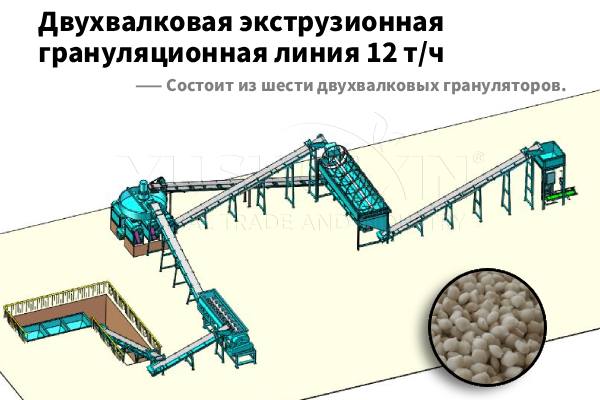
Двухвалковая-экструзионная-грануляционная-линия-12 т-ч

Двухвалковая-экструзионная-грануляционная-линия-12 т-ч

Основной принцип: Чистая сила, точное формование

Линия гранулирования валковым прессом, также известная как сухое гранулирование прессованием, основана на простом и эффективном процессе:
Без добавления каких-либо связующих веществ или воды, только с помощью пары синхронно и навстречу друг другу вращающихся валков, на предварительно подготовленный сухой порошок оказывается огромное линейное давление (обычно от нескольких десятков до сотен кН/см). Порошок принудительно сжимается в зазоре между валками, проходя этапы «наполнение — удаление воздуха — прессование — формование», в результате чего образуются плотные хлопья или брикеты. Затем они подвергаются дроблению, доработке и просеиванию, чтобы в итоге получить однородные гранулы заданного размера.

Проще говоря: Порошок → Прессование под высоким давлением в хлопья/брикеты → Дробление и просеивание в гранулы.

Ключевые преимущества: Почему выбирают линию гранулирования валковым прессом?

По сравнению с традиционным мокрым гранулированием (например, с использованием смесителя-гранулятора или распылительной сушки), линия гранулирования валковым прессом демонстрирует неоспоримые преимущества:

1. По-настоящему «зеленая» технология: Весь процесс не требует добавления воды или связующих, отсутствует этап последующей сушки, что значительно экономит энергию. Продукт получается высокой чистоты без внесения примесей.
2. Превосходное качество гранул: Полученные гранулы обладают высокой прочностью, большой плотностью, хорошей сыпучестью и химической стабильностью. Это особенно важно для последующей упаковки, транспортировки и использования (например, для медленного высвобождения удобрений или металлургического спекания).
3. Высокая производственная и экономическая эффективность:
Непрерывное, крупносерийное производство с высокой степенью автоматизации и стабильной работой.
Крайне низкое энергопотребление, исключаются затратные системы сушки и тепловая энергия.
Высокий выход продукта, мелкая фракция (пыль) может быть возвращена в процесс, что минимизирует потери материала.
4. Широкая применимость к материалам: Особенно подходит для материалов, чувствительных к нагреву, склонных к химическим реакциям или изменению физических свойств при контакте с водой, таких как некоторые неорганические соли, минералы, металлические порошки, химические полупродукты.

Типичные области применения: Широкое поле для использования

Линии гранулирования валковым прессом глубоко интегрированы во многие ключевые отрасли экономики:

Промышленность удобрений: Производство гранулированных удобрений, таких как диаммонийфосфат, комплексные удобрения, нитрат аммония-кальция. Гранулы обладают высокой прочностью, устойчивостью к слеживанию и хорошими свойствами медленного высвобождения.
Металлургия и горнодобывающая промышленность: Брикетирование рудных концентратов (железный, хромитовый, марганцевый и др.) в высокоплотные окатыши для последующего спекания или плавки, что повышает эффективность работы печей.
Керамика и огнеупорные материалы: Приготовление гранулированных масс для плитки, огнеупорных материалов, улучшение их прессовочных и спекательных свойств.
Химическая промышленность: Переработка различных порошкообразных химических продуктов: красителей, пигментов, катализаторов, моющих средств, неорганических солей.
Охрана окружающей среды и вторичные ресурсы: Брикетирование промышленной пыли (например, зола-унос ТЭС, металлургическая пыль) и отходов для удобства утилизации, ресурсного использования или безопасного захоронения.

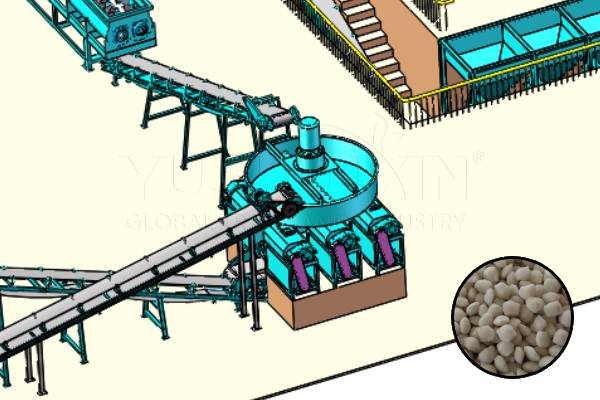
Группа-гранулирования-в-роликовой-грануляционной-линии

Группа-гранулирования-в-роликовой-грануляционной-линии

Ключевые компоненты производственной линии: Эффективная интегрированная система

Полноценная линия гранулирования валковым прессом — это не просто два валка, а точная система, состоящая из:

1. Система подготовки сырья: Бункер-питатель, дозатор, возможен смеситель. Обеспечивает однородность состава и необходимую сыпучесть порошка, поступающего в пресс.
2. Основное оборудование — пресс-гранулятор (валковый):
Валки: Сердце установки. Часто изготавливаются из высокотвердых, износостойких материалов (легированная сталь, карбид вольфрама). Поверхность может иметь различную форму отверстий или канавок для получения гранул заданной формы (овал, таблетка).
Гидравлическая система: Создает и точно контролирует огромное давление между валками, что гарантирует качество формования.
Приводная система: Обеспечивает синхронную и плавную работу валков.
3. Система последующей обработки:
Дробилка-гранулятор: Измельчает спрессованные крупные хлопья на мелкие фрагменты.
Вибросито: Сортирует гранулы по размеру. Готовый продукт отправляется на выход, крупная фракция возвращается на дробление, мелкая пыль — обратно в систему для повторного гранулирования.
4. Система автоматического управления: На базе PLC, контролирует параметры (давление, подача, температура и др.), обеспечивает автоматическую работу всей линии и защитные блокировки.

Уверенный шаг к эффективному и чистому производству

В условиях целей по снижению углеродного следа и модернизации промышленности ценность технологии сухого формования под давлением, которую представляет линия гранулирования валковым прессом — сухой, энергосберегающий и эффективный метод — становится все более очевидной. Это не просто процесс «укрупнения» порошка, а ключевая технологическая стадия, повышающая добавленную стоимость продукта, обеспечивающая эффективное использование ресурсов и снижающая энергопотребление и выбросы при производстве.

Для предприятий, занимающихся переработкой порошков и стремящихся к технологическим инновациям, модернизации продукции и контролю затрат, инвестиции в хорошо спроектированную и надежную линию гранулирования валковым прессом являются уверенным и разумным шагом на пути к интеллектуальному и экологичному производству. Для получения более подробной информации, пожалуйста, посетите:https://www.sxmashina.com/rolikovaya-ekstruzionnaya-liniya-granulyatsii/

Cómo diseñar una planta eficiente de fertilizantes NPK solubles en agua

En la agricultura moderna, la búsqueda de mayor eficiencia y sostenibilidad impulsa la creación de una fábrica de fertilizantes solubles NPK altamente tecnológica. Los fertilizantes NPK solubles, al disolverse totalmente en agua, permiten una absorción más rápida de nutrientes por las plantas y un uso más racional de los recursos hídricos y del suelo.

Soluciones tecnológicas para la producción

El diseño de una planta de este tipo requiere analizar todo el proceso, desde las materias primas hasta el empaque final. Entre las principales Soluciones para la fabricación de fertilizantes solubles NPK, destacan los sistemas automatizados de dosificación y mezcla, que garantizan proporciones precisas de nitrógeno, fósforo y potasio. Además, los sistemas de control digital y monitoreo continuo permiten mantener una calidad constante y ajustar los parámetros según las necesidades de cada cultivo.

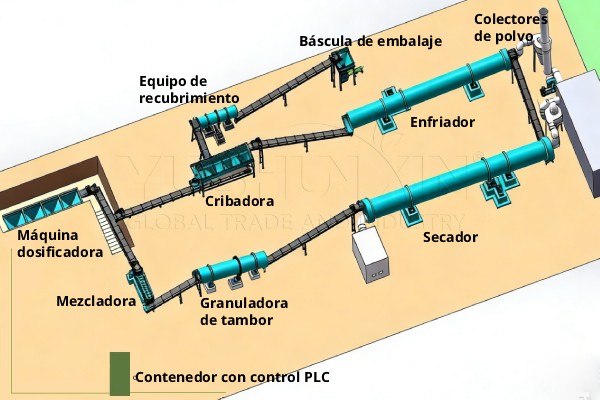
Sistema granulación tambor rotatorio para la fabricación fertilizantes NPK solubles industriales

Sistema granulación tambor rotatorio para la fabricación fertilizantes NPK solubles industriales

Eficiencia energética y sostenibilidad

La optimización de recursos es esencial. Implementar circuitos cerrados de agua, sistemas de recuperación de calor y manejo eficiente de residuos convierte a la planta en un modelo de sostenibilidad. Una fábrica de fertilizantes solubles NPK moderna debe minimizar el impacto ambiental sin sacrificar productividad, integrando tecnologías limpias y fuentes de energía renovable.

Evaluación económica del proyecto

El Costo de la planta de fertilizantes NPK depende de diversos factores: capacidad de producción, niveles de automatización, calidad del equipamiento y ubicación geográfica. Aunque la inversión inicial puede ser alta, una planta bien diseñada reduce considerablemente los costos operativos y de mantenimiento a largo plazo. Optar por soluciones escalables o modulares facilita además la ampliación futura, protegiendo la inversión inicial.

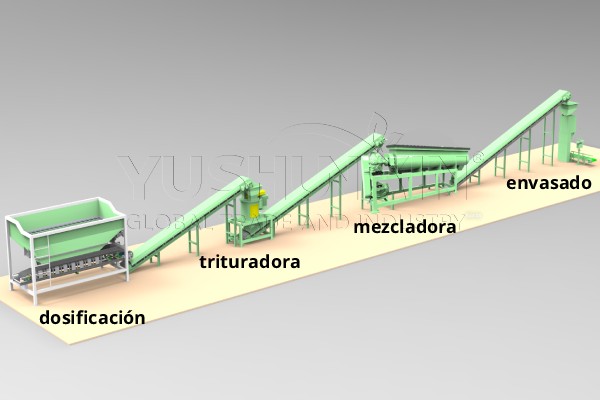
Línea de fabricación de fertilizantes solubles en polvo

Línea de fabricación de fertilizantes solubles en polvo

Sistemas de granulación y calidad del producto

Un aspecto técnico fundamental es la selección adecuada de los Sistemas de granulación de fertilizantes NPK. Si bien los fertilizantes solubles se presentan comúnmente en forma cristalina o líquida, algunos procesos requieren microgranulación para mejorar la manipulación y disolución del producto final. Los sistemas de granulación modernos ofrecen uniformidad en tamaño de partícula, lo que garantiza una nutrición más balanceada y un mayor rendimiento de las cosechas.

Conclusión

Diseñar una planta eficiente de fertilizantes NPK solubles en agua exige integrar tecnología, control de calidad y conciencia ambiental. Las Soluciones para la fabricación de fertilizantes solubles NPK actuales permiten producir con mayor consistencia, reducir el consumo energético y aprovechar al máximo las materias primas. En definitiva, una Fábrica de fertilizantes solubles NPK moderna no solo aumenta la productividad agrícola, sino que promueve un modelo de desarrollo responsable y sostenible.  Si estás interesado en el proyecto puedes visitar https://www.equipofertilizantesoluble.com/producto/planta-de-preparacion-de-fertilizantes-npk-solubles-en-agua/

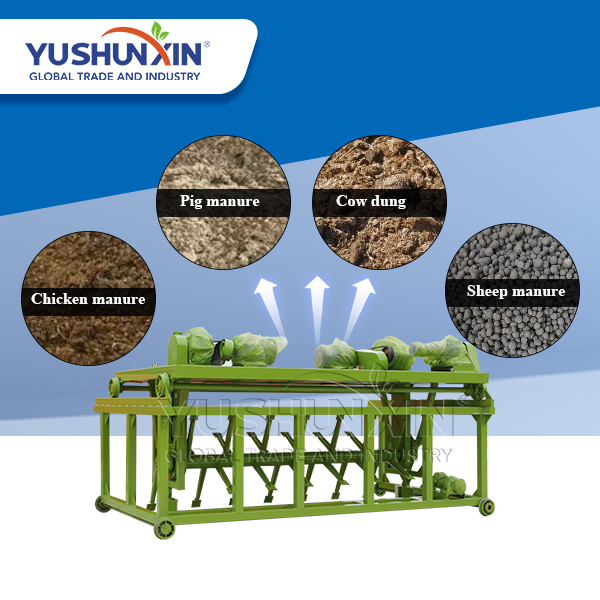
Groove Type Compost Turner: A Cost-Effective Solution for Small-Scale Bio Composting

For small and medium-sized compost producers, choosing the right composting equipment is essential to balance investment cost, operating efficiency, and compost quality. Among various compost turning solutions, the groove type compost turner—also known as a trench compost turner or channel compost turning machine—has become a popular option for small-scale bio composting projects.

This system is widely used in organic fertilizer composting, livestock manure treatment, and agricultural waste recycling, especially where space and budget are limited.

What Is a Groove Type Compost Turner?

A groove type compost turner operates inside a concrete composting trench. The machine moves along rails, turning and mixing organic materials such as cow manure, chicken manure, pig manure, sludge, and crop residues. During operation, the compost turner improves aeration, moisture distribution, and microbial activity, accelerating the aerobic composting process.

Compared with windrow composting, groove composting allows for higher material stacking, better temperature control, and reduced odor leakage.

application of groove type compost turner

application of groove type compost turner

Why Groove Composting Works Well for Small Biofertilizer Plants

One of the main reasons groove compost turners are considered an economic composting solution is their high space utilization. Composting trenches make it possible to process more organic waste in a confined area, which is especially beneficial for farms or fertilizer plants with limited land.

In addition, groove composting systems are relatively easy to automate. Many groove type compost turning machines support variable speed control and programmable operation, reducing labor dependence while maintaining consistent compost quality.

Key Advantages of Groove Type Compost Turners

Lower operating cost compared to fully enclosed fermentation systems

Stable composting environment, suitable for year-round operation

Efficient oxygen supply, promoting faster organic matter decomposition

Compatible with high-moisture raw materials, such as fresh manure

Expandable design, allowing multiple composting channels in one workshop

These advantages make groove compost turners ideal for small biofertilizer plants, organic fertilizer startups, and livestock farms looking to convert waste into value-added compost. If you need, welcome to consult YUSHUNXIN!

Typical Applications in Bio Composting

Groove compost turning equipment is commonly used for:

Livestock manure composting (cow, poultry, pig manure)

Digestate and sludge composting

Organic fertilizer raw material fermentation

Pre-treatment before biofertilizer granulation

The fermented compost produced through groove composting can be further processed into powder or granular organic fertilizer, increasing its market value.

Final Thoughts

For producers seeking a balance between cost control and composting efficiency, the groove type compost turner for bio composting offers a practical and scalable solution. Its simple structure, stable performance, and adaptability to different organic wastes make it one of the most reliable choices for small-scale composting operations.

With proper trench design and equipment selection, groove composting can serve as a solid foundation for sustainable biofertilizer production. If you need the groove type compost turner, welcome to visit: https://www.biofertilizerproduction.com/product/groove-type-compost-turner-of-biofertilizer/

How Much Capital Is Needed to Establish a BB Fertilizer Manufacturing Plant?

A BB fertilizer manufacturing plant cost usually depends on several visible factors, and each factor influences the total budget in a measurable way. A bulk blend fertilizer factory mainly spends capital on the blending/mixing process, the batching and conveying procedure, the packaging section, and the workshop infrastructure that supports stable production. Moreover, raw material types and their physical properties also affect machine selection, wear parts, and long-term operating cost. Therefore, an investor usually evaluates fertilizer plant setup plans by matching target capacity, automation level, and bulk blending accuracy. A clear quotation often requires a defined product formula, a defined bulk blended fertilizer production procedure, and a defined equipment list for the BB fertilizer plant.

What raw materials suit BB/bulk blending production and influence the fertilizer plant setup budget?

Raw materials for BB fertilizer production usually include granular or prilled fertilizers that keep stable particle size and flowability, because a bulk blending process requires consistent feeding and consistent discharge. Common examples include urea (prill or granular), ammonium sulfate, ammonium chloride, CAN, and different grades of NPK compound granules. Potash sources such as MOP (potassium chloride) and SOP (potassium sulfate) also suit bulk blend fertilizer making when they keep similar granule size to the nitrogen sources. Phosphate sources often include DAP, MAP, and TSP granules, which support bulk blended fertilizer preparation with stable density.

Furthermore, secondary nutrient and micronutrient materials can enter BB blending when they keep a granular form, such as kieserite, gypsum granules, zinc sulfate granules, boron granules, or coated trace-element carriers. Material moisture content, anti-caking performance, and particle strength directly change the cost, because dusty or fragile materials require more dust control, more sieving, and more replacement parts. As a result, a BB fertilizer plant setup usually reserves budget for raw material storage bins, pre-screening, and calibrated dosing to protect blending accuracy.

BB Fertilizer Plant

BB Fertilizer Plant

Which blending/mixing equipment configuration controls the bulk blend fertilizer factory price most effectively?

A bulk blend fertilizer factory price often depends on the core mixing machinery and the accuracy of the batching procedure, because bulk blending requires uniform distribution without breaking granules. A static or automatic batching machine usually becomes the first cost driver, since the batching unit determines formula accuracy and production rhythm. In addition, a bucket elevator or belt conveyor normally connects bins, batching, and the BB fertilizer blender, and the conveying equipment determines layout length, workshop height, and installation cost.

A small-capacity BB fertilizer blender/mixer often uses a simple and compact blending structure, and this option fits projects that target flexible formulas with moderate output. A drum type BB fertilizer mixer usually supports larger capacity bulk blend fertilizer manufacturing, because the drum provides continuous mixing action with stable residence time. Moreover, a well-designed mixer emphasizes low granule breakage, short mixing time, and convenient inspection ports, which improves product consistency and reduces maintenance budget. Therefore, a business plan for building a BB fertilizer plant typically compares mixer volume, liner material, drive system, and anti-corrosion configuration to reach a balanced equipment quotation.

What supporting machines raise or reduce the fertilizer manufacturing plant cost in real projects?

A bb fertilizer plant cost does not only include a blender, because a complete bulk blending production line usually requires preparation and finishing sections. A crushing machine, such as a vertical crusher or chain crusher, often enters the plan when some incoming materials arrive in lumps or when recycled oversize returns from screening. This crusher selection affects capital cost and also affects the stability of the bulk blended fertilizer production process, because uniform granule size improves mixing uniformity and reduces segregation.

A packing machine also influences the fertilizer plant budget, because bulk blend fertilizer production frequently serves both bulk delivery and bagged sales. An automatic weighing and packing system typically raises equipment price, yet it improves labor efficiency and reduces weight deviation claims. In addition, a simple screening unit can help remove dust or oversize particles, which protects the BB fertilizer blending procedure and improves product appearance. Each supporting machine adds cost, but each machine also reduces operational risk, so a realistic fertilizer plant setup often includes two or three key auxiliaries rather than an oversized list.

Conclusion

An investor usually estimates how much capital is needed to establish a BB fertilizer manufacturing plant by dividing the budget into raw material handling, batching and conveying, BB fertilizer blending/mixing machinery, and packing and auxiliary equipment. Raw material selection such as urea, DAP, MOP, and NPK granules directly affects the blending accuracy and the maintenance cost of the bulk blending process. Equipment choices such as an automatic/static batching machine, bucket elevator, drum type BB fertilizer mixer, crusher, and packing machine usually determine the main fertilizer plant price range. A reliable quotation requires clear capacity, automation expectations, and workshop conditions, because each factor changes the fertilizer manufacturing plant cost in a practical way. A professional fertilizer equipment manufacturer- Yushunxin can provide matching production line configurations and cost-effective solutions for bulk blend fertilizer production planning. You can visit: https://www.fertilizerproductequipment.com/bb-fertilizer-plant-cost/

Новый тип гранулятора с зубчатыми мешалками для органических удобрений — ваш надежный помощник в производстве органических удобрений

Современное сельское хозяйство предъявляет высокие требования к качеству и эффективности органических удобрений. Процесс гранулирования играет ключевую роль, определяя конечные потребительские свойства продукта. Внедрение инновационного гранулятора с зубчатым механизмом для перемешивания органических удобрений открывает перед производителями новые возможности для оптимизации технологического цикла и повышения конкурентоспособности продукции.

Наши-сотрудники-отрегулируют-влажность-гранулятора-белая-сажа-для-вас

Наши-сотрудники-отрегулируют-влажность-гранулятора-белая-сажа-для-вас

Какие технологические проблемы решает для вас гранулятор с зубчатым механизмом?

Традиционные методы гранулирования часто сталкиваются с трудностями при работе с разнородным органическим сырьем. Неравномерное перемешивание компонентов приводит к получению гранул разной плотности и состава, что негативно сказывается на их прочности и скорости растворения. Новое оборудование оснащено уникальной системой зубчатых мешалок, которые обеспечивают интенсивное и однородное перемешивание всей массы. Эта технология гарантирует равномерное распределение влаги и связующих веществ, поэтому каждая гранула обладает идентичными агротехническими характеристиками. Следовательно, вы получаете партию продукции стабильно высокого качества, что укрепляет доверие ваших клиентов и упрощает логистику.

Как именно зубчатый механизм влияет на эффективность вашего производства?

Ключевое преимущество конструкции заключается в значительном повышении общей производительности линии. Зубчатые мешалки активно воздействуют на сырьевую смесь, сокращая время цикла приготовления однородной массы перед гранулированием. Более того, такая конструкция способствует формированию плотных и гладких гранул с минимальным количеством мелочи (пыли) на выходе. Вы сокращаете потери сырья и энергозатраты на додрабливание или повторную переработку брака. Кроме того, надежность механизма снижает частоту простоев для технического обслуживания, что напрямую увеличивает фонд рабочего времени и рентабельность всего предприятия.

Новый-гранулятор-органических-удобрений

Новый-гранулятор-органических-удобрений

Почему это оборудование становится вашим стратегическим активом?

Инвестиции в современный гранулятор с зубчатым механизмом для перемешивания органических удобрений носят стратегический характер. Аппарат демонстрирует высокую адаптивность к различным типам сырья: от птичьего помета и навоза до торфа и сапропеля. Такая гибкость позволяет вам быстро реагировать на изменения рынка и расширять ассортимент без серьезных модификаций производственной линии. Одновременно, повышается экологическая безопасность процесса за счет сокращения пылеобразования и более полного использования исходных материалов. Таким образом, вы не только модернизируете отдельный участок, но и повышаете устойчивость и технологический потенциал всего бизнеса в долгосрочной перспективе.

В итоге, выбор профессионального гранулятора определяет качество продукции и экономику производства. Инновационный гранулятор с зубчатым механизмом решает фундаментальные задачи отрасли, обеспечивая однородность смешивания, высокую производительность и надежность. Это оборудование становится незаменимым элементом технологической цепи, способствуя выпуску коммерчески успешного и агрономически эффективного продукта. Для производителей, стремящихся к лидерству на рынке, внедрение таких решений является логичным и обоснованным шагом. Для получения дополнительной информации посетите:https://www.sxmashina.com/novyy-granulyator-organicheskikh-udobreniy/

Эффективное, гибкое и надежное производственное решение для малых и средних предприятий по производству удобрений

Планируете проект по производству комплексных удобрений, но испытываете сложности с выбором оборудования? Сталкиваетесь ли вы со следующими проблемами:

Ограниченный бюджет и желание найти линию с умеренной стоимостью входа и коротким сроком окупаемости?
Изменчивый рыночный спрос, требующий линии с гибкой производительностью (регулируемой в диапазоне 1-3 т/ч) для работы с разными объемами заказов?
Опасения, что линия будет слишком сложной в эксплуатации и обслуживании, с высокими текущими расходами?
Строгие требования к прочности, округлости и равномерности распределения питательных веществ в готовых гранулах для повышения конкурентоспособности продукции?

Если вы ищете ответы на эти вопросы, то эта готовая к отгрузке линия гранулирования NPK производительностью 1-3 т/ч — именно то идеальное решение, которое создано для вас.

Дисковая-грануляционная-линия-NPK

Дисковая-грануляционная-линия-NPK

Почему стоит выбрать эту линию гранулирования NPK 1-3 т/ч?

Данная производственная линия — это не просто набор оборудования, а тщательно спроектированная и проверенная на практике эффективная, энергосберегающая и стабильная система. Она идеально балансирует первоначальные инвестиции, эксплуатационные расходы и выходную эффективность, являясь оптимальным выбором для запуска или расширения среднего предприятия по производству удобрений.

Ключевые преимущества:

1. Отличная экономичность и гибкость

Точная производительность: Диапазон 1-3 т/ч позволяет удовлетворять потребности начального этапа или небольших заказов, оставляя запас для будущего роста рынка, избегая простоев или нехватки мощностей.
Эффективные инвестиции: По сравнению с крупными линиями, данное решение требует более доступных инвестиций, позволяя быстрее выйти на рынок с меньшей нагрузкой на активы и ускорить возврат средств.
Хорошая адаптивность к составу: Ключевая технология гранулирования (например, тарельчатый или барабанный гранулятор) обладает хорошей совместимостью с различными рецептурами NPK, позволяя производить универсальные, специализированные и другие виды комплексных удобрений.

2. Отработанная технология и гарантия качества

Основной процесс: Применяется проверенная технология парового гранулирования или гранулирования из пульпы, обеспечивающая полное протекание химических реакций, равномерное распределение питательных веществ внутри гранул, высокую прочность и низкую распыляемость.
Ключевое оборудование: Линия включает смеситель, гранулятор, ротационную сушилку, охладитель, систему грохочения, машину для нанесения покрытия и автоматические весы для фасовки. Критичные узлы изготовлены из износостойких и коррозионностойких материалов для долгосрочной стабильной работы.
Высокое качество продукта: Многоступенчатая система грохочения и дробления возвратного материала обеспечивает однородность гранул по размеру (обычно 2-5 мм), хорошую округлость и высокую товарную привлекательность.

3. Автоматизация и низкие эксплуатационные расходы

Высокая степень автоматизации: Линия оснащена базовой системой автоматического управления для централизованного контроля, что значительно снижает зависимость от количества и опыта операторов, минимизируя человеческие ошибки.
Оптимизированное энергопотребление: Конструкция систем сушки и охлаждения ориентирована на тепловую эффективность, снижая расход топлива. Компактная компоновка оборудования уменьшает энергозатраты на транспортировку материала.
Простое обслуживание: Оборудование спроектировано для удобного ежедневного обслуживания и замены изнашиваемых деталей, что минимизирует время простоя и долгосрочные затраты на обслуживание.

Двухвалковая-линия-гранулирования-NPK-1-3-тч

Двухвалковая-линия-гранулирования-NPK-1-3-тч

4.Решение «под ключ» и надежное обслуживание

Готовая к отгрузке: Оборудование полностью подготовлено, что значительно сокращает сроки поставки и помогает вам захватить рыночные возможности. Техническая поддержка: Мы предоставляем полный комплекс услуг: от планировки помещения, монтажа и пусконаладки оборудования до обучения операторов и консультаций по технологии производства. Гарантийная поддержка: Обеспечиваем надежную поставку запасных частей и оперативное послепродажное обслуживание для бесперебойной работы вашего производства.

Основные технологические этапы и состав линии

1. **Дробление и дозирование сырья:** Дробление слежавшегося сырья и точное дозирование нескольких компонентов системой подачи.
2. **Смешивание и гранулирование:** Однородная смесь поступает в гранулятор, где под воздействием оптимальной влажности и вращения формируются гранулы-заготовки нужного размера.
3. **Сушка и охлаждение:** Гранулы-заготовки последовательно поступают в ротационную сушилку и охладитель для удаления излишней влаги и стабилизации температуры.
4. **Сортировка и нанесение покрытия:** Охлажденные гранулы разделяются на вибрационном грохоте. Кондиционный продукт поступает в машину для нанесения покрытия (антислеживателя). Крупные гранулы отправляются на дробление, а мелкая фракция возвращается в гранулятор, обеспечивая рециркуляцию материала.
5. **Фасовка готовой продукции:** Завершающий этап — автоматическое взвешивание и упаковка на автоматических весах.

Целевая аудитория и области применения

Предприниматели, планирующие строительство нового среднего предприятия по производству комплексных удобрений.
Предприятия, которым требуется модернизировать существующие малые мощности для увеличения производительности и уровня автоматизации.
Компании, нуждающиеся в дополнительной специализированной линии для конкретного проекта или регионального рынка.
Производители, ориентированные на выпуск высококачественных, дифференцированных комплексных удобрений.

Действуйте сейчас, чтобы воспользоваться возможностью!

Рынок не ждет, и возможности могут быть упущены. Эта экономичная линия гранулирования NPK 1-3 т/ч — мощный инструмент для выхода или укрепления на рынке комплексных удобрений с минимальными рисками и максимальной эффективностью.

Мы предлагаем не просто оборудование, а надежное партнерство.

Свяжитесь с нами, и вы получите:
Подробный список оборудования и коммерческое предложение.
Индивидуальные технологические решения с учетом вашего сырья и требований к продукту.
Возможность осмотреть оборудование или посетить объекты заказчиков.

Позвоните или напишите нам прямо сейчас, чтобы получить подробную информацию и сделать первый шаг к успешному запуску производства! Для получения более подробной информации, пожалуйста, посетите:https://www.liniyaudobreniy.com/liniya-granulirovaniya-npk-1-3-t-ch/