
What Factors Influence the Efficiency of Extrusion Granulation in Lime Powder Processing?

In modern fertilizer production, the efficiency of extrusion granulation directly determines the stability and quality of final granules. When industries use lime powder, limestone, or lime rock as important raw materials, the physical behavior and chemical stability of these substances influence every stage of pellet making. Different sectors, from building material manufacturing to environmental treatment, require specific granule forms and mechanical strengths. Therefore, understanding what factors affect extrusion granulation from limestone powder allows enterprises to select proper machinery, optimize energy use, and maintain steady fertilizer output.

What Types of Raw Materials Improve Lime Powder Fertilizer Granulation Performance?

In fertilizer manufacturing, lime powder, limestone, and dolomite often act as alkaline agents that adjust soil pH and supply calcium and magnesium. The granulation process of these materials also supports other industries. In the chemical sector, lime-based granules serve as neutralizing fillers that enhance the uniform reaction of other compounds. The metallurgical industry benefits from lime rock granules because they help absorb impurities during smelting, while the environmental field values lime powder pellets for flue gas desulfurization and water purification. Each industry demands particular particle hardness, moisture resistance, and size distribution, which means that the preparation process and material blending must remain consistent and controlled. Stable granules ensure efficient transport, uniform spreading, and predictable chemical function.

How Does Material Preparation Affect the Extrusion and Compacting Procedure?

Before the lime powder extruder performs dry granulation, the material preparation stage defines the later mechanical results. Proper crushing and mixing influence how lime powder fertilizer behaves under pressure. A clain crusher reduces particle size and promotes uniformity, while a horizontal mixer ensures complete combination with additives such as ammonium salts or trace elements. During this production procedure, controlled moisture and even composition allow each particle to pass smoothly into the double roller extruder. When particles remain too coarse or moisture fluctuates, the press force cannot compact them evenly, leading to irregular granules or weak mechanical strength. Therefore, material conditioning, feeding speed, and temperature balance directly support consistent granulating outcomes and lower energy consumption during pelletizing.

Why Do Machine Features Determine the Stability of Extrusion Granulation?

The structural design of fertilizer machinery defines how efficiently lime-based materials transform into firm pellets. A loader type feeder ensures continuous and accurate delivery of materials to the extrusion granulator, preventing uneven compaction. The double roller system provides stable compression that shapes fine powder into dense pellets without additional drying. A rotary screening machine separates qualified granules from oversize and undersize fractions, maintaining uniform product quality. Meanwhile, belt conveyors connect each process stage smoothly, and an automatic packaging scale secures precise weight control for shipment. The combination of these machines allows consistent pellet making under controlled pressure, ensuring that every particle meets technical specifications. Continuous operation also lowers maintenance time and enhances the overall efficiency of the fertilizer production line.

How Can Process Optimization Strengthen the Quality of Lime Rock Fertilizer Pellets?

Process optimization focuses on balancing extrusion pressure, roller speed, and moisture distribution within the pelletizing system. When operators adjust these parameters according to lime rock characteristics, they achieve stable compaction and surface smoothness. Uniform pellet density improves storage stability and reduces dust formation. Additionally, temperature control inside the extruder minimizes material decomposition and preserves the chemical effectiveness of the fertilizer. Enterprises often combine dry granulation with periodic screening feedback, adjusting the limestone powder granulator gap to maintain consistent particle size. Such continuous monitoring supports long-term cost reduction, higher yield rates, and reliable fertilizer performance across industrial applications.

Why Should Enterprises Choose Reliable Equipment Manufacturers for Lime Powder Fertilizer Production?

The efficiency of extrusion granulation reflects not only raw material behavior but also the technological reliability of the equipment. When production lines use high-precision machines, consistent granule quality becomes easier to achieve. A professional fertilizer equipment manufacturer—Yushunxin—offers integrated solutions that cover feeding, crushing, mixing, extruding, screening, and packaging. Its machinery helps enterprises enhance lime powder fertilizer preparation, reduce production costs, and achieve long-term stable pellet manufacturing results. By aligning equipment performance with process parameters, customers ensure that the entire granulating procedure remains efficient, sustainable, and ready for advanced industrial demands. You can visit: https://www.extruder-granulator.com/product/limestone-powder-granulation-machine/
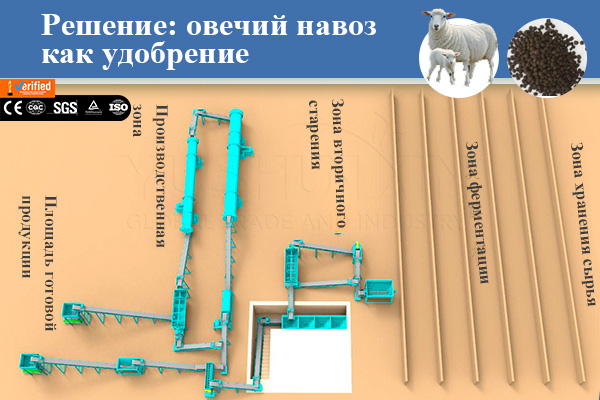
Почему инвестиции в органическое удобрение из овечьего навоза — это разумная стратегия?

В последние годы в странах СНГ растет спрос на органическую продукцию и технологии органического земледелия. В этом направлении производство чистых органических удобрений становится одним из самых перспективных. Особенно удобрение из овечьего навоза — это натуральный источник питательных веществ для растений, который быстро завоевывает ключевые позиции на развивающемся рынке органики.

Линия по производству органических удобрений из овечьего навоза

Линия по производству органических удобрений из овечьего навоза

1. Почему именно овечий навоз?

Экологичность:
Овечий навоз — полностью натуральный продукт, который не содержит химических добавок. Его использование помогает восстанавливать плодородие почвы, улучшать ее структуру и дополнять микроэлементами.

Высокое содержание питательных веществ:
В сравнении с навозом других животных, овечий навоз содержит больше азота, калия и фосфора, что особенно ценно для органического земледелия.

Практически не содержит семян сорняков:
Благодаря особенностям пищеварения у овец, в их навозе почти нет жизнеспособных семян сорняков, что облегчает применение.

2. Рынок и перспективы

Рост спроса на органику:
По оценкам, рынок органических удобрений в России ежегодно растет на 10-15%. Все больше фермеров, агрохозяйств и даже дачников выбирают натуральные продукты, заботясь о здоровье почвы и экологии.

Государственная поддержка:
Во многих странах Евразийского экономического союза действуют государственные программы поддержки органического сельского хозяйства, что дополнительно стимулирует спрос на качественные органические удобрения.

Экспортный потенциал:
Гранулированные или компостированные продукты из овечьего навоза востребованы не только на внутреннем рынке, но и могут экспортироваться в страны ЕС и другие регионы с высокими экологическими стандартами.

3. Преимущества для инвесторов

Низкая себестоимость сырья:
В России, Казахстане, Кыргызстане, Монголии и других странах овцеводство хорошо развито, что обеспечивает стабильные и дешевые поставки сырья.

Быстрая окупаемость:
Технология производства органических удобрений несложная, оборудование не требует больших вложений, а при хорошо выстроенных продажах проект может окупиться за 1-2 года.

Разнообразие продукции:
Можно производить гранулированные, компостированные, жидкие экстракты — подходящие и для крупных агропредприятий, и для дачников.

Стабильный спрос:
Даже в периоды экономической нестабильности спрос на органику продолжает расти — здоровое питание и экологичные технологии становятся приоритетом общества и государства.

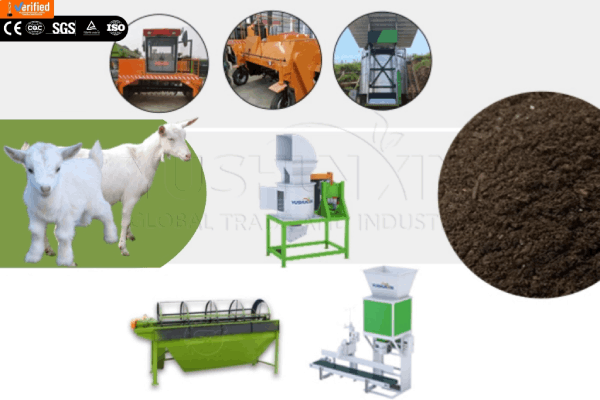
Оборудование-для-производства-порошковое-удобрение-из-овечьего-навоза

Оборудование-для-производства-порошковое-удобрение-из-овечьего-навоза

4. Основные этапы запуска бизнеса

1. Анализ рынка и выбор региона для закупки сырья
2. Организация производственной линии (компостирование, гранулирование, упаковка)
3. Создание бренда и каналов продаж (агроцентры, интернет, розничные магазины для садоводов и огородников)
4. Сертификация продукции — необходимый этап для экспорта
5. Построение дистрибьюторской сети

Инвестиции в производство органических удобрений из овечьего навоза — это не только экологически значимый, но и перспективный коммерческий проект. Органический рынок стран СНГ активно развивается, спрос на чистые натуральные удобрения будет только расти. Сейчас самое удачное время для входа или расширения в этом сегменте.

Хотите узнать больше о технологии производства, расчетах эффективности или найти надежных партнеров? Обращайтесь к нашей профессиональной команде — мы поможем сделать ваш “зеленый” инвестиционный шаг успешным! Более подробную информацию можно найти на сайте:https://www.liniyaudobreniy.com/resheniye-ovechiy-navoz-kak-odobreniye/

A Practical Guide to Efficient Bio Liquid NPK Fertilizer Manufacturing

Producing bio liquid NPK fertilizer is one of the most efficient ways to supply crops with nutrients that are quickly absorbed. Compared with granular fertilizers, the bio liquid NPK fertilizer production process is flexible, easy to automate, and allows farmers to customize nutrient formulas according to soil needs. Below is a step-by-step overview of how this process works and what equipment you’ll need for stable, high-quality production.

1. Understanding the Core Composition

Bio liquid NPK fertilizers combine nitrogen (N), phosphorus (P), and potassium (K) with beneficial microorganisms or organic extracts. The bio components improve nutrient uptake and soil structure, while the liquid form ensures even distribution through foliar spraying or irrigation systems. Most plants require a nutrient ratio between 5-5-5 and 10-10-10, but bio-based formulations can be adjusted according to crop growth stages and soil conditions.

2. Preparing Raw Materials and Water Quality

High-purity raw water is essential for the liquid bio NPK fertilizer manufacturing process. Before blending, raw water passes through filtration and sterilization to remove chlorine and heavy metals. Then, soluble nutrient salts—such as urea, ammonium phosphate, and potassium nitrate—are dissolved in specific proportions. For bio-based fertilizers, additional ingredients like amino acids, humic acid, or seaweed extract are added to enhance microbial activity and nutrient efficiency.

3. Blending and Chelation Stage

The blending tank is the core of the bio NPK liquid fertilizer production line. Stainless steel tanks equipped with agitators ensure uniform mixing and prevent sedimentation. During the chelation stage, micronutrients such as Fe, Zn, or Mn are stabilized using chelating agents to improve nutrient availability. Maintaining the right pH (usually 6.0–7.0) and temperature (25–35°C) is critical to protect the microbial strains.

4. Microbial Enrichment and Additives

In bio liquid fertilizers, adding beneficial microorganisms is a key step. Automatic dosing systems help control the amount of bacteria such as Bacillus or Rhizobium. This not only increases nutrient conversion efficiency but also extends the fertilizer’s shelf life. Some factories use a separate fermentation or maturation tank to stabilize these microbes before packaging.

5. Filtration and Packaging

Before filling, the liquid passes through a fine filtration system to remove impurities. Depending on production scale, packaging can range from small bottles to 1,000 L IBC tanks. High-precision liquid filling machines reduce waste and maintain product consistency.

6. Cost and Scale Considerations

The bio liquid NPK fertilizer production process cost varies depending on the automation level and equipment materials. A small-scale plant may cost around $30,000–$60,000, while a fully automatic line with chelation and microbial dosing systems can exceed $120,000. The main expenses include stainless steel tanks, mixing systems, pumps, control panels, and filling units. Learn more!

In summary, producing bio liquid NPK fertilizer involves balancing nutrient chemistry and microbial technology. A well-designed production system ensures stable nutrient quality, high solubility, and long shelf life—helping manufacturers deliver efficient and eco-friendly solutions for modern agriculture. Welcome to visit: https://www.biofertilizerproduction.com/product/liquid-biofertilizer-production-technology/

Inside the Liquid NPK Fertilizer Manufacturing Process: From Raw Materials to Ready Solutions

The growing demand for high-efficiency, easy-to-absorb plant nutrients has brought liquid NPK fertilizer production into focus. Unlike traditional granular fertilizers, liquid NPK formulations provide a fast nutrient release and allow precision application through drip irrigation or foliar spraying. Understanding the liquid NPK fertilizer manufacturing process helps producers plan efficient production lines and control quality from start to finish.


1. Selecting and Preparing Raw Materials

The foundation of any liquid fertilizer formulation process lies in the selection of water-soluble materials. Common raw inputs include urea, ammonium nitrate, phosphoric acid, potassium chloride, and trace elements such as zinc, iron, or boron. These ingredients must meet solubility and purity standards to ensure stability in the final product.
At this stage, a mixing and dissolution system is used to prepare individual nutrient solutions, ensuring consistency before they enter the blending phase.


2. Precise Blending and Reaction Control

The heart of the NPK liquid fertilizer manufacturing line is the blending and reaction section. Using automatic dosing systems and stainless-steel reactors, operators can precisely control nutrient ratios according to market or crop requirements.
Temperature and pH regulation during the reaction phase help achieve uniform distribution and prevent crystallization—a key factor in producing a stable and clear fertilizer solution.


3. Filtration, Cooling, and Quality Stabilization

Once blended, the solution passes through multi-stage filtration and sedimentation units to remove undissolved particles. This step ensures a clean appearance and prevents clogging during application.
Some producers also add chelating agents or stabilizers to improve nutrient bioavailability and extend shelf life. At this point, the liquid NPK fertilizer preparation system transforms into a ready-to-package product.

complete NPK liquid  liquid fertilizer plant

complete NPK liquid liquid fertilizer plant


4. Storage and Packaging Solutions

The finished fertilizer is stored in sealed tanks to maintain uniformity and prevent contamination. Depending on scale, producers may use automatic liquid filling machines to package products in bottles, drums, or IBC tanks. For larger operations, a complete NPK liquid blending plant integrates storage, pumping, and labeling systems to streamline logistics. Click here to get more!


5. Efficiency and Flexibility in Design

Each liquid fertilizer production line can be customized to meet local raw material availability, formulation needs, and production scale. Whether operating a small pilot plant or a large continuous system, proper process control minimizes waste and maximizes nutrient value.


The liquid NPK fertilizer manufacturing process not only enhances agricultural efficiency but also supports sustainable farming practices. By adopting well-designed equipment and precise process management, producers can deliver fertilizers that meet modern crop needs—efficiently, safely, and profitably.  To learn more, please visit:  https://www.liquidfertilizerplants.com/products/npk-liquid-fertilizer-production-line/