
Top 5 Machines Ideal for Small-Scale Organic Fertilizer Manufacturing

Starting a small-scale organic fertilizer production business requires efficient yet compact equipment that suits limited space and budget. Selecting the right machinery can ensure smooth operations, consistent product quality, and low operational costs. Here are the top five essential machines commonly used in small-scale organic fertilizer manufacturing:

1. Compost Turner

A compost turner is crucial for accelerating the decomposition of organic materials such as animal manure, crop residues, and kitchen waste. For small organic waste composting operations, a tractor-pulled windrow turner or a groove-type turner*is ideal. These machines promote aerobic fermentation by regularly mixing and ventilating the compost piles, helping reduce odor, moisture, and pathogens.

2. Crushing Machine

After composting, the materials may still contain clumps or unfermented residues. A semi-wet material crusher is perfect for small-scale oeganic fertilizer making due to its low power consumption and ability to handle high-moisture content. This machine breaks down larger particles into uniform, fine powder, improving granulation efficiency.

3. Horizontal Mixer

Uniform blending of compost powder with other organic or nutrient-rich materials is key to producing balanced organic fertilizer. A horizontal mixer is compact and easy to operate, offering thorough mixing in a short time. It ensures consistent nutrient distribution and prepares the mixture for efficient granulation.

4. Disc Granulator

Among the various granulation methods, the disc (or pan) granulator stands out for small-scale plants. Its simple structure, low investment cost, and ability to produce uniform spherical granules make it ideal. It is suitable for processing organic materials with moisture content between 20–40%.

5. Drying and Cooling Machine (Optional)

While not always necessary for very small production volumes, a rotary drum dryer and cooler can significantly improve product quality and storage life. These machines reduce moisture content in granules and cool them to prevent caking. For small setups, mini drum dryers or natural air-drying options can be considered.

Learn more.

Conclusion

Small-scale organic fertilizer manufacturing is a promising business with low entry barriers. Choosing the right set of machines—starting with a compost turner, crusher, mixer, disc granulator, and optional drying system—can help you establish a cost-effective and efficient production line. These machines are not only space-saving and energy-efficient but also scalable for future expansion. More choice, you can visit https://www.fertilizerbusinessplan.com/small-scale-organic-fertilizer-production/
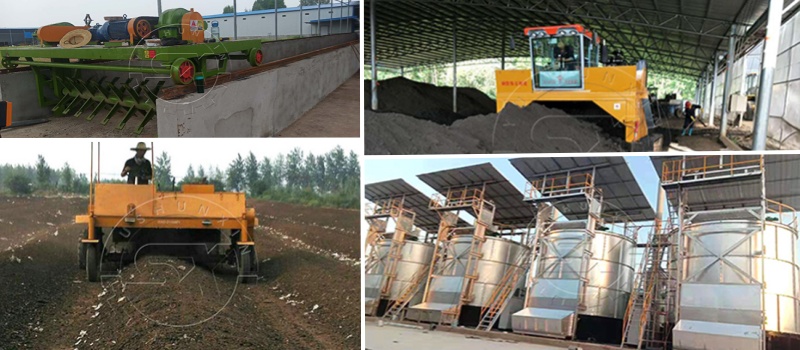
Small-Scale Industrial Compost Machine Advantages

As the world increasingly shifts towards sustainable agricultural practices, the demand for efficient and eco-friendly solutions for organic waste management continues to grow. Small-scale industrial compost machines have emerged as a game-changer in the field of composting, offering a cost-effective and environmentally friendly way to convert organic waste into nutrient-rich compost. In this blog, we will explore the benefits and applications of small-scale industrial compost machines and how they are revolutionizing the way we manage organic waste in various industries.

1. What is a Small-Scale Industrial Compost Machine?

A small-scale industrial compost machine is a compact, automated system designed to efficiently compost organic waste on a small to medium scale. These machines utilize advanced technology to accelerate the composting process, turning organic waste materials such as food scraps, agricultural residues, and green waste into high-quality compost in a matter of days or weeks, rather than months.

Small scale organic compost machines for sale

Small scale organic compost machines for sale

2. Benefits of Small-Scale Industrial Compost Machines:

– Efficient composting: Small-scale industrial composter can process organic waste quickly and efficiently, reducing the time required for composting compared to traditional methods.
– Space-saving design: These machines are designed to be compact and can fit into small spaces, making them ideal for urban environments or small businesses with limited space.
– Odor control: The closed in-vessel small-scale compost turner helps control odors and prevents the escape of unpleasant smells, making them suitable for indoor operation.
– Nutrient-rich compost: The compost produced by these machines is high in nutrients and beneficial microorganisms, making it an excellent soil amendment for agriculture landscaping, and gardening.
– Environmentally friendly: By the aerobic fermentation of organic waste and converting it into compost, small-scale industrial compost machines help reduce greenhouse gas emissions and promote sustainable waste management practices.
Click here to learn more

3. Applications of Small-Scale Industrial Compost Machines:

– Restaurants and food service establishments: Small-scale compost machines are ideal for restaurants and food service establishments looking to reduce food waste and create their own compost for gardening or landscaping.
– Schools and educational institutions: These machines are a valuable educational tool for teaching students about composting and sustainability, while also helping schools manage their organic waste more efficiently.
– Small farms and agricultural businesses: Small-scale industrial compost machines can help small farms and agricultural businesses turn crop residues and livestock manure into nutrient-rich compost to improve soil health and fertility.
– Community gardens and urban farms: Urban gardening initiatives and community gardens can benefit from small-scale compost machines to produce compost locally and sustainably for their gardening projects.
– Municipalities and waste management facilities: Local governments and waste management facilities can utilize small-scale industrial compost machines to reduce the volume of organic waste sent to landfills and promote a circular economy.

Conclusion:

Small-scale industrial compost machines are revolutionizing the way we manage organic waste, offering a sustainable and efficient solution for converting food scraps, agricultural residues, and green waste into valuable compost. By harnessing advanced technology and automation, these machines make composting accessible to a wide range of industries and organizations, promoting environmental stewardship and resource conservation. As we strive towards a more sustainable future, small-scale compost machines play a crucial role in closing the loop on organic waste management and supporting the transition to a circular economy in agriculture and beyond. If you need more information about comosting, you can visit https://www.fertilizerbusinessplan.com/types-of-small-scale-composting/