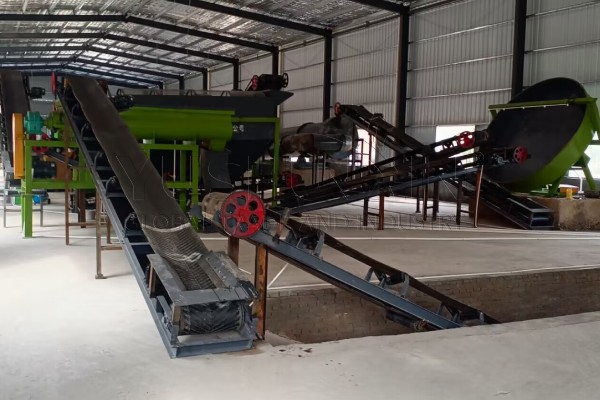
Производственная линия порошковых удобрений 10 т/ч: идеальное сочетание масштабируемости и индивидуальной настройки

В современном производстве удобрений эффективность и гибкость часто являются взаимоисключающими требованиями. Однако хорошо спроектированная производственная линия порошковых удобрений производительностью 10 т/ч способна обеспечить стабильный масштабный выпуск продукции, одновременно предлагая клиентам высоконастраиваемые решения. Это не просто гарантия объемов, но и прочная основа для повышения конкурентоспособности предприятия и его способности реагировать на разнообразные рыночные запросы.

Ключевая конфигурация линии: модульный дизайн и интеллектуальная координация

Стандартная линия производительностью 10 т/ч — это не просто набор оборудования, а модульная, автоматизированная система, предназначенная для непрерывной точной работы.

1. Система приема и предварительной обработки сырья
Сырьевые силосы большой емкости: Отдельное хранение для различных видов сырья (мочевина, моноаммонийфосфат, хлористый калий, сульфат аммония, мезо- и микроэлементы), оснащенные устройствами для разрушения сводов для стабильной подачи.
Система точного дозирования: Использование нескольких высокоточных электронных весовых дозаторов или дозаторов с принципом потери веса для непрерывного динамического дозирования — первый ключевой этап обеспечения точности рецептуры.

2. Основной смесительный участок
Высокоэффективный смеситель: Обычно используется двухвальный лопастной высокоэффективный смеситель с коэффициентом вариации однородности смешивания (CV) ≤5%, гарантирующий равномерное распределение питательных веществ. Для производительности 10 т/ч смеситель должен завершать цикл за очень короткое время (обычно 90-120 секунд).

3. Обработка и хранение готовой продукции
Эффективная система охлаждения: Для отвода тепла, выделяемого в процессе смешивания, устанавливается псевдоожиженный охладитель, быстро снижающий температуру материала и предотвращающий слеживание и потери питательных веществ.
Автоматическая система фасовки: Интеграция с автоматическими весовыми фасовочными станциями для упаковки в мешки различного веса (например, 25 кг/50 кг), с возможностью установки роботизированных паллетайзеров для значительного сокращения трудозатрат.
Интеллектуальное складирование: Готовая продукция транспортируется ленточным конвейером в силос для временного хранения или непосредственно на фасовочную линию для обеспечения непрерывности процесса.

4. «Мозг»: центральная система управления
Вся линия управляется интегрированной центральной системой управления на базе PLC/DCS. Из диспетчерской осуществляется ввод рецептур, задание параметров, управление оборудованием и мониторинг. Данные о производстве записываются автоматически, обеспечивая полную прослеживаемость качества продукции.

Больше, чем «стандарт»: возможности кастомизации — это душа линии

Истинная ценность линии производительностью 10 т/ч заключается в ее мощном потенциале для расширения и индивидуальной настройки.

Гибкость рецептур: Линия позволяет легко переключаться на производство смешанных удобрений (BB-удобрений), специализированных тукосмесей, органоминеральных удобрений и др. Достаточно ввести новую рецептуру в систему управления.

Расширение функциональных модулей:
Добавление микро-/мезоэлементов: Возможность онлайн-добавления жидких или порошкообразных цинка, бора, кальция, магния и др.
Обработка против слеживания: Интеграция устройства для автоматического внесения антислеживающих добавок (масляных или порошковых), значительно улучшающего сохранность продукта.
Индивидуальный цвет: Установка системы добавления красителей для производства удобрений разного цвета в целях брендинга или дифференциации продуктовой линейки.

Адаптивность к сырью: Для гигроскопичных или склонных к слеживанию материалов (например, некоторых видов мочевины, хлористого аммония) могут быть предусмотрены этапы предварительной сушки или специального дробления.

Анализ инвестиционной ценности: двойной рост эффективности и прибыльности

1. Явный эффект масштаба: При работе в две смены месячный объем производства может достигать примерно 4000 тонн, что позволяет эффективно удовлетворять крупносерийный спрос (региональные поставки, экспорт) и значительно снижать удельную себестоимость тонны продукции.
2. Стабильное и контролируемое качество: Автоматизация исключает человеческий фактор, обеспечивая высокую однородность каждой партии и укрепляя репутацию бренда.
3. Быстрое реагирование на рынок: Гибкая система рецептур позволяет предприятию оперативно разрабатывать и выпускать новые виды специализированных удобрений в соответствии с сезоном, данными о почвах и запросами клиентов.
4. Оптимизация трудозатрат: Высокая степень автоматизации требует лишь небольшого числа технических специалистов для контроля, что существенно снижает зависимость от квалифицированного персонала и долгосрочные расходы на оплату труда.

Ключ к успеху: профессиональный дизайн и комплексное обслуживание

Планирование и инвестиции в линию производительностью 10 т/ч требуют ответственного выбора поставщика оборудования и инжиниринговой компании с солидным опытом. Такой партнер обеспечит не только надежное оборудование, но и, опираясь на опыт реализации проектов, предложит комплексное решение, включающее технологическую планировку, подбор оборудования, автоматизацию, пылеулавливание и пуско-наладочные работы. Это гарантирует, что линия станет не просто чертежом, а высокоэффективным и стабильно работающим активом.

В условиях роста требований к точному земледелию и экологичности, интеллектуальная и гибкая производственная линия порошковых удобрений производительностью 10 т/ч — это уже не просто инструмент, а стратегический актив для модернизации продуктовой линейки и бизнес-модели. Она позволяет совмещать масштабное производство с индивидуальной настройкой, помогая производителям удобрений вырваться из однородной конкурентной среды и выйти на новые уровни развития. Для получения более подробной информации, пожалуйста, посетите:https://www.liniyaudobreniy.com/izuchite-sem-shagov-kotorye-pomogut-vam-dostich-10-tonn-poroshkoobraznogo-organicheskogo-udobreniya-v-chas/

How Roller Press Fertilizer Granulation Line Improves Fertilizer Granules Making Efficiency

In modern fertilizer manufacturing, efficiency determines both production cost and market competitiveness. Producers are increasingly seeking technologies that reduce energy consumption while maintaining consistent granule quality. One solution gaining widespread adoption is the roller press fertilizer granulation line, a system designed to convert powder materials directly into uniform fertilizer granules with minimal processing steps. By optimizing material compaction and simplifying workflow, this technology significantly enhances overall granulation efficiency.

Understanding the Principle of Efficient Granulation

Traditional wet granulation systems often rely on water or steam addition followed by drying and cooling stages. These extra procedures increase energy usage, equipment investment, and maintenance complexity. In contrast, roller press systems operate based on mechanical compression.

Using the dry extrusion granulation method, powdered raw materials are compressed between counter-rotating rollers under high pressure. This force causes particles to bond together without chemical binders or liquid additives. The formed sheets are then crushed and screened into uniform granules.

Because the process eliminates moisture handling, manufacturers can achieve faster throughput and more stable production conditions.

Eliminating Drying to Reduce Energy Consumption

One of the largest operational costs in fertilizer plants comes from fuel or electricity required for drying equipment. Roller press technology addresses this challenge through a No-drying fertilizer pelletizing process, which removes the need for rotary dryers entirely.

Without drying stages, production lines benefit from:

* Lower energy consumption

* Reduced equipment footprint

* Faster startup and shutdown cycles

* Less dust and emission generation

This streamlined workflow allows operators to maintain continuous production with fewer operational interruptions, directly improving plant efficiency.

Optimized Compaction for Compound Fertilizer Production

Efficiency is not only about speed but also about granule strength and nutrient uniformity. For compound fertilizers, especially multi-nutrient blends, consistent compression is essential.

Through controlled pressure and precise roller design, Compaction granulation for NPK compound fertilizer ensures that mixed powders are densified evenly. This produces granules with stable hardness, reducing breakage during transportation and packaging. Improved granule integrity also minimizes recycling rates, meaning fewer materials must return to the production loop — a key factor in boosting output efficiency.

Flexibility Across Different Raw Materials

Another advantage of roller press systems is their adaptability to various fertilizer formulations. Materials that are sensitive to heat or moisture perform particularly well in dry compaction processes.

For example, a Roller press granulator for ammonium sulfate enables producers to process this crystalline material without decomposition or caking issues associated with wet processing. The ability to handle diverse raw materials on the same line reduces equipment redundancy and increases production flexibility.

Automation and Process Stability

Modern roller press granulation lines often integrate automatic feeding, pressure control, and screening systems. Automation stabilizes material flow and ensures consistent granule size distribution. Stable operation reduces operator intervention and lowers the risk of production downtime caused by process fluctuations.

Additionally, fewer processing stages mean fewer failure points, contributing to higher equipment reliability and longer operational cycles.

Conclusion

Improving fertilizer granulation efficiency requires balancing energy savings, product quality, and operational simplicity. Roller press technology achieves this balance by replacing complex wet processes with direct mechanical compaction. By eliminating drying, improving material utilization, and supporting flexible fertilizer formulations, roller press granulation systems provide manufacturers with a cost-effective and scalable solution for modern fertilizer production.


How Can Poultry Waste Be Converted into Carbon-Rich Fertilizer with Modern Technology?

The utilization of chicken manure in modern agriculture has taken a significant turn with the advancement of technology. Transforming chicken manure into carbon-based fertilizer not only enhances soil fertility but also addresses waste management issues. This blog explores the raw materials suitable for carbon-based fertilizer production, outlines the processing procedure, and highlights essential machinery involved in this transformation.

What Raw Materials Are Ideal for Carbon-Based Fertilizer Production?

Chicken manure serves as a rich source of nutrients essential for plant growth. In addition to chicken dung, other raw materials can be incorporated into the carbon-based fertilizer production process. These include straw, wood chips, and various organic waste materials, which can enhance the carbon content of the final product. By combining these materials, producers can achieve a balanced nutrient profile, making the carbon-based fertilizer more effective.

The ideal mixture ratio often depends on the specific nutritional needs of the target crops. Chicken manure, with its high nitrogen content, complements carbon-rich materials like straw. This combination not only promotes microbial activity during fermentation but also improves the overall quality of the carbon-based fertilizer being produced. Understanding the properties of these raw materials is important for optimizing the production process.

biochar and chicken dung

biochar and chicken dung

What Machinery and Equipment Are Essential for Processing Chicken Manure?

The production of carbon-based fertilizer from chicken manure involves a series of specialized machinery. The first critical piece of equipment is the carbonization furnace, which facilitates the conversion of organic waste into charcoal. This process involves heating the chicken manure at high temperatures in an oxygen-restricted environment, resulting in carbon-rich products.

After carbonization, the material often requires processing through a crushing machine. A carbon fertilizer grinder machine helps in breaking down the charred chicken manure into a more manageable powdery form. This step is vital for ensuring uniform granulation in subsequent stages of production.

Granulators play a crucial role in transforming the powdered material into granules. Disc granulators, flat die granulators, and drum granulators are commonly used for this purpose. These machines apply pressure and moisture to the powdered chicken manure, resulting in the formation of uniform pellets. The size and shape of the granules significantly influence the fertilizer’s efficacy when applied to soil.

What Are the Key Steps in the Chicken Manure Processing Procedure?

The processing procedure for transforming chicken manure into carbon-based fertilizer includes several essential steps. Initially, raw materials undergo pre-treatment, which may involve drying to reduce moisture content. This step ensures better efficiency during the carbonization process.

Following pre-treatment, the chicken manure is subjected to carbonization. This step produces a carbonaceous material that is foundational for the final product. The resulting charcoal must then be crushed to a fine powder to facilitate easier granulation.

Once the material is in powdered form, a granulator is employed to produce granules. The granulation process not only improves the handling of the fertilizer but also enhances nutrient release when applied to soil. Subsequently, a drying machine may be used to reduce moisture levels in the final product, which is essential for storage and transportation.

Finally, packing machines are utilized to package the carbon-based fertilizer for distribution. This comprehensive processing procedure ensures that the chicken manure is effectively converted into a valuable carbon-based fertilizer, ready for use in agricultural applications.


In conclusion, transforming chicken manure into carbon-based fertilizer involves the careful selection of raw materials, the use of advanced machinery, and a structured processing procedure. By implementing efficient equipment like carbonization furnaces, crushing machines, and granulators, producers can create high-quality fertilizers that benefit both the soil and the environment. For manufacturers looking to enhance their production capabilities, considering advanced machinery from a professional fertilizer equipment manufacturer like Yushunxin can be a significant step forward. You can visit: https://www.charbasedfertilizermachine.com/product/chicken-dung-and-biochar-as-fertilizer/

Ваше производство удобрений требует индивидуальных решений

На быстро меняющемся рынке сельского хозяйства производители удобрений сталкиваются с различными проблемами: узкие места в эффективности, давление затрат, потребность в модернизации или трудности с разработкой новой продукции. Универсальные решения часто не справляются со специфическими задачами. Мы специализируемся на предоставлении индивидуальных производственных решений, сочетая технический опыт с вашими конкретными целями для достижения реального повышения ценности.

Cow manure solid biofertilizer production line

Cow manure solid biofertilizer production line

1. Точная диагностика: понимание ваших уникальных потребностей

Мы всегда начинаем с глубокого понимания. Наша команда инженеров посещает ваше производство, подробно беседует с техническим персоналом и совместно анализирует три ключевых аспекта:

1. Текущее состояние процесса: выявление реальных узких мест и потерь эффективности в существующем оборудовании и технологических цепочках.
2. Бизнес-цели: определение позиционирования вашей продукции, планирования мощностей и рыночной стратегии.
3. Операционные реалии: полный учет вашего бюджета, ресурсов и ожиданий по окупаемости инвестиций.

2. Набор модульных решений: гибкое соответствие, точная реализация

Основываясь на богатом отраслевом опыте, мы предлагаем модули решений, которые можно гибко комбинировать для предприятий любого масштаба и потребностей:

Решения по повышению эффективности: для клиентов, желающих оптимизировать существующие линии. Модернизация ключевых этапов (например, гранулирование, сушка), автоматизация и оптимизация энергопотребления для быстрого повышения эффективности и стабильности продукции при минимальных инвестициях.
Решения для новых/расширяющихся проектов: модульное, многофункциональное проектирование для новых линий, обеспечивающее гибкость и возможность будущей модернизации.
Решения для специальных удобрений: специализация на водорастворимых, органических удобрениях и других нишевых продуктах. Предоставление специальных технологических пакетов и систем точного дозирования.
Решения для цифрового управления: интеграция систем MES и платформ прослеживаемости качества для точного управления и принятия решений на основе данных.

Planta de granulación fertilizantes solubles en disco de 5TPH

Planta de granulación fertilizantes solubles en disco de 5TPH

3. Полный цикл услуг: от проекта до постоянной оптимизации

Наше сотрудничество не ограничивается поставкой оборудования — это постоянное партнерство:

1. Совместное проектирование: совместная работа с вашей командой для полного соответствия решения вашим реалиям.
2. Профессиональная реализация: детальное инженерное проектирование, подбор подходящего оборудования, надежный ввод в эксплуатацию.
3. Передача технологий: системное обучение вашей команды для уверенной эксплуатации и понимания ключевых процессов.
4. Долгосрочная поддержка: после завершения проекта мы продолжаем предоставлять регулярные визиты, удаленную поддержку и рекомендации по обновлению для обеспечения устойчивых результатов.

4. Почему выбирают нас?

Мы считаем, что лучшие решения рождаются в сотрудничестве. Выбирая нас, вы получаете:

Подлинный индивидуальный подход: отказ от шаблонов, принцип “одно предприятие — одна стратегия”.
Ответственность на протяжении всего цикла: мы отвечаем за все — от концепции до долгосрочной оптимизации.
Баланс технологий и экономики: мы стремимся найти для вас оптимальный баланс между технической продвинутостью и окупаемостью инвестиций.

Сделайте первый шаг к индивидуальной модернизации

Давайте начнем с подробной беседы, чтобы вместе определить ваши ключевые задачи и цели. Свяжитесь с нами, чтобы запланировать бесплатную первичную диагностику и консультацию по решениям. Исследуйте будущее вашего производства удобрений — более эффективное и конкурентоспособное. Для получения более подробной информации, пожалуйста, посетите:https://www.liniyaudobreniy.com/liniya/

Cow Dung Biofertilizer Plant Cost Breakdown: What Does a Cow Manure Fertilizer Factory Really Cost?

For investors planning to convert cattle manure into organic biofertilizer, one of the first questions is always the same: how much does a cow dung based biofertilizer manufacturing plant cost? The answer depends not on a single number, but on production form, capacity, and equipment configuration.

Unlike chemical fertilizer plants, a cow manure biofertilizer production line can be built with flexible budgets, making it attractive for farms, cooperatives, and regional fertilizer suppliers.

Cost Range of a Cow Dung Biofertilizer Plant

In practice, the investment cost of a cow dung fertilizer plant usually falls into three levels:

Powder biofertilizer line: USD 30,000 – 80,000

Granular biofertilizer production line: USD 80,000 – 300,000

Fully automated large-scale plant: USD 300,000+

The key difference lies in whether granulation, drying, and coating systems are included.

Powder vs Granular: Where the Cost Difference Comes From

A cow dung powder fertilizer plant focuses on composting, crushing, screening, and packing. This configuration is suitable for local agricultural markets and cost-sensitive investors.

Granular fertilizer plants require additional systems such as:

Fertilizer granulator (disc or drum type)

Rotary dryer and cooler

Fertilizer coating machine

These machines significantly increase the total investment but also improve product appearance, storage performance, and selling price.

Cow manure solid biofertilizer production line

Cow manure solid biofertilizer production line

Core Equipment That Determines the Budget

When estimating cow manure biofertilizer plant cost, buyers should focus on the following core equipment:

Compost turner for aerobic fermentation

Crushing and mixing system

Granulation machine (optional but critical for pellets)

Screening and packing equipment

For example, choosing a disc granulation line instead of a drum granulator can reduce upfront investment while maintaining stable pellet quality for small to medium capacity plants. Inquiry YUSHUNXIN to get economical cow manure biofertilizer production equipment.

Capacity Has a Direct Impact on Investment

Production capacity is another major cost driver.
A 3–5 t/h cow dung biofertilizer production line usually costs far less than a 10–20 t/h industrial plant, not only in equipment price but also in land, civil construction, and power consumption.

Many investors start with a mid-scale plant and expand later as manure supply and market demand grow.

Hidden Costs You Should Not Ignore

Beyond equipment, a complete cow manure fertilizer project also includes:

Civil construction and workshop layout

Electrical control systems

Dust control and environmental protection equipment

These factors influence the final investment but are often overlooked during early budgeting. Click here to get more !

Is a Cow Dung Biofertilizer Plant Worth the Cost?

From a long-term perspective, cow manure biofertilizer production offers stable raw material supply, low operating costs, and growing demand for organic fertilizers. With proper equipment selection, investors can balance initial plant cost and future profitability effectively.

Understanding the real cost structure is the first step toward building a sustainable and profitable cow dung biofertilizer manufacturing plant. If you need a business plan, welcome to visit: https://www.biofertilizerproduction.com/product/cow-dung-biofertilizer-making-line/